Get Job-Ready with Industry IT TrainingEnroll Now!

Back to Blogs

Complete Guide to Web Development for Beginners

December 15, 2025
8 min read
Complete Guide to Web Development for Beginners

Web Development: A Complete Beginner’s Guide

In today’s digital-first world, websites and web applications have become essential for businesses, organizations, and individuals. From simple informational websites to complex web-based platforms, web development plays a crucial role in building a strong online presence. This guide by Mascev Private Limited is designed to help beginners understand what web development is, how it works, the skills required, and the career opportunities it offers.

What is Web Development?

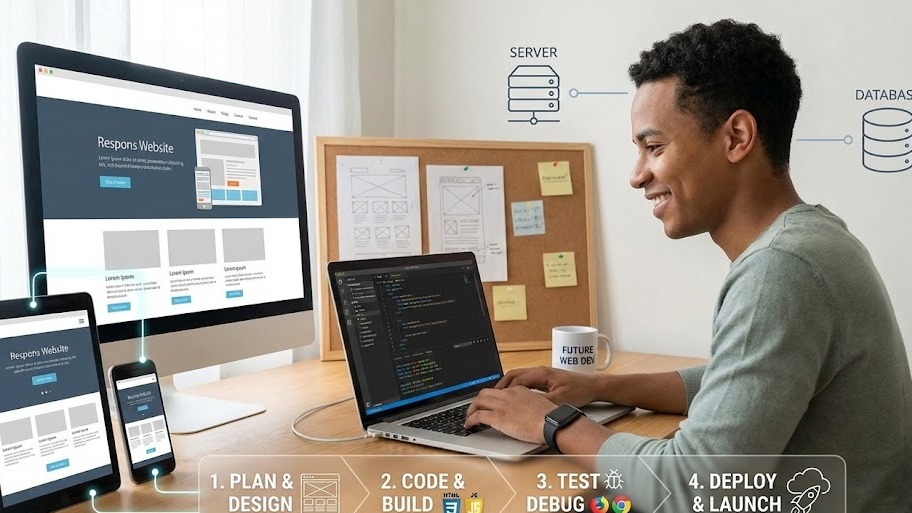
Web development is the process of creating websites and web applications that run on the internet. It involves planning, designing, building, testing, and maintaining web-based systems that users can access through a browser.

Web development covers multiple aspects, including:

  • Designing user interfaces

  • Writing business logic

  • Managing databases

  • Ensuring performance and security

  • Deploying and maintaining applications

In simple terms, web development turns ideas into functional digital experiences.

Why Web Development is Important Today

Almost every business today relies on the internet to reach customers, offer services, and build trust. Websites and web applications help businesses:

  • Establish an online identity

  • Reach global audiences

  • Automate processes

  • Improve customer engagement

  • Increase sales and visibility

Because of this growing reliance on digital platforms, web development has become one of the most in-demand skills globally.

Core Technologies for Beginners

HTML – Structure

HTML (HyperText Markup Language) is the foundation of web development. It defines the structure and content of web pages, such as headings, paragraphs, images, and links.

CSS – Styling

CSS (Cascading Style Sheets) is used to style and design web pages. It controls layout, colors, fonts, animations, and responsiveness.

JavaScript – Interactivity

JavaScript adds interactivity and dynamic behavior to websites. It allows pages to respond to user actions like clicks, form submissions, and real-time updates.

Together, HTML, CSS, and JavaScript form the core of frontend development.

Advanced Web Development Concepts

As beginners progress, they move beyond basic technologies and learn advanced concepts such as:

Frontend Frameworks & Libraries

  • React.js

  • Angular

  • Vue.js

These tools help build scalable, fast, and maintainable user interfaces.

Backend Technologies

  • Node.js

  • Python (Django, Flask, FastAPI)

  • Java

  • PHP

Backend frameworks simplify server-side development and API creation.

Databases

  • MySQL

  • PostgreSQL

  • MongoDB

Databases store and manage application data securely.

APIs and Integration

APIs allow different systems to communicate. They enable features like payment gateways, third-party services, and mobile app integration.

Deployment and Hosting

Deployment involves making applications live on the internet using platforms such as:

  • Cloud hosting

  • VPS

  • CI/CD pipelines

Tools Used in Web Development

Web developers rely on various tools to improve productivity and efficiency:

  • Code editors (VS Code)

  • Version control (Git, GitHub)

  • Browser developer tools

  • Package managers

  • Build and testing tools

Web Development Roadmap for Beginners

A structured learning path helps beginners progress effectively:

  1. Learn HTML, CSS, and JavaScript

  2. Understand responsive design

  3. Learn a frontend framework

  4. Study backend development

  5. Work with databases

  6. Build real-world projects

  7. Learn deployment and security

Consistency and hands-on practice are key to mastering web development.

Career Opportunities in Web Development

Web development offers diverse career paths, including:

  • Frontend Developer

  • Backend Developer

  • Full-Stack Developer

  • Web Designer

  • Software Engineer

With businesses continuously expanding online, skilled web developers are in high demand worldwide.

Why Choose Web Development as a Career?

Web development is attractive because it offers:

  • High demand and job security

  • Global career opportunities

  • Freelancing and remote work options

  • Continuous learning and growth

  • Competitive salaries

It is suitable for beginners, career switchers, and professionals alike.

1

Frontend and Backend Overview

Frontend and Backend Overview

Frontend and Backend Overview

Web applications are built using two major components: Frontend and Backend. Together, they create complete, functional, and interactive digital experiences. Understanding the difference between frontend and backend development helps beginners choose the right learning path and enables businesses to build scalable web solutions.

At Mascev Private Limited, we focus on balancing both frontend and backend technologies to deliver high-performing and secure web applications.

What is Frontend Development?

Frontend development refers to the client-side part of a website or web application—the portion that users see and interact with directly in their web browsers.

Key Responsibilities of Frontend Development:

  • Designing user interfaces (UI)

  • Creating responsive layouts

  • Implementing interactive features

  • Ensuring cross-browser compatibility

  • Optimizing performance and accessibility

The goal of frontend development is to provide a smooth, intuitive, and visually appealing user experience.

Core Frontend Technologies

HTML (Structure)

HTML defines the structure and content of web pages, such as headings, text, images, and forms.

CSS (Styling)

CSS controls the visual appearance of web pages, including colors, fonts, layouts, and responsiveness.

JavaScript (Interactivity)

JavaScript adds dynamic behavior such as animations, form validation, and real-time updates.

Popular Frontend Frameworks & Libraries

  • React.js

  • Angular

  • Vue.js

These tools help developers build scalable, fast, and maintainable user interfaces.

What is Backend Development?

Backend development refers to the server-side part of a web application. It handles data processing, business logic, authentication, and communication between the frontend and the database.

Key Responsibilities of Backend Development:

  • Managing databases

  • Handling user authentication and authorization

  • Creating APIs

  • Implementing business logic

  • Ensuring security and performance

The backend works behind the scenes to ensure the application functions correctly.

Core Backend Technologies

Programming Languages

  • Python (Django, Flask, FastAPI)

  • JavaScript (Node.js)

  • Java

  • PHP

Databases

  • Relational: MySQL, PostgreSQL

  • NoSQL: MongoDB

APIs

APIs enable communication between frontend and backend systems, allowing data to be exchanged securely.

How Frontend and Backend Work Together

Frontend and backend communicate through APIs. When a user performs an action (such as submitting a form), the frontend sends a request to the backend. The backend processes the request, interacts with the database if needed, and sends a response back to the frontend.

This collaboration ensures:

  • Smooth data flow

  • Secure transactions

  • Dynamic and personalized content

Full-Stack Development

Full-stack development combines both frontend and backend skills. Full-stack developers understand the complete application lifecycle and can build end-to-end solutions.

Career Paths

Frontend Developer

Focuses on UI, UX, and user interaction.

Backend Developer

Specializes in server logic, databases, and security.

Full-Stack Developer

Handles both frontend and backend responsibilities.

2

Career Scope in Web Development

Career Scope in Web Development

Career Scope in Web Development

Web development is one of the most in-demand and rewarding career paths in the modern digital world. With businesses, startups, and organizations increasingly relying on websites and web applications, skilled web developers are essential for building scalable, functional, and user-friendly digital platforms.

At Mascev Private Limited, we aim to guide beginners and professionals to explore career opportunities, understand required skills, and grow in the web development domain.

Why Choose a Career in Web Development?

Web development offers numerous advantages for beginners and experienced professionals alike:

  1. High Demand Across Industries
    Every business today needs a digital presence—ranging from small startups to large enterprises. This creates a constant demand for web developers globally.

  2. Diverse Career Opportunities
    Web development offers multiple roles and specializations, from frontend and backend to full-stack development, web design, and DevOps.

  3. Global Opportunities
    Web developers can work remotely for international clients or companies, making it a globally transferable skill.

  4. Competitive Salaries
    Skilled web developers earn lucrative salaries, with opportunities for freelance work, contracts, and full-time employment.

  5. Continuous Learning and Growth
    The field evolves rapidly with new technologies, frameworks, and tools, offering continuous learning and career progression.

Popular Web Development Career Roles

1. Frontend Developer

  • Focuses on the user interface (UI) and user experience (UX)

  • Works with HTML, CSS, JavaScript, and frontend frameworks like React.js, Angular, or Vue.js

  • Responsible for creating responsive and interactive web pages

2. Backend Developer

  • Manages server-side logic, databases, and APIs

  • Works with languages and frameworks like Node.js, Python (Django/Flask), PHP, or Java

  • Ensures security, performance, and scalability of applications

3. Full-Stack Developer

  • Combines frontend and backend skills

  • Capable of building end-to-end web applications

  • Requires knowledge of both UI/UX design and server-side logic

4. Web Designer / UI-UX Designer

  • Focuses on visual design, layout, and user interaction

  • Uses tools like Figma, Adobe XD, or Photoshop

  • Works closely with frontend developers to implement designs

5. DevOps Engineer

  • Manages deployment, cloud hosting, and continuous integration

  • Works with tools like AWS, Docker, Kubernetes, and CI/CD pipelines

  • Ensures smooth application deployment and performance monitoring

6. Freelance Web Developer

  • Offers web development services independently

  • Works on client projects globally

  • Offers flexibility, autonomy, and multiple income streams

Emerging Opportunities in Web Development

The web development field is constantly evolving, creating new opportunities:

  • Progressive Web Apps (PWA) development

  • E-commerce platform development

  • Web application security and penetration testing

  • AI and chatbot integration in websites

  • Mobile-first and responsive web solutions

  • Cloud-based web applications

Skills Required for a Successful Web Development Career

  1. Core Technologies: HTML, CSS, JavaScript

  2. Frontend Frameworks: React, Angular, Vue.js

  3. Backend Technologies: Node.js, Python, PHP, Java

  4. Databases: MySQL, MongoDB, PostgreSQL

  5. Version Control: Git, GitHub

  6. Deployment and Cloud Services: AWS, Azure, Heroku

  7. Soft Skills: Problem-solving, teamwork, communication, adaptability

How to Start a Career in Web Development

  1. Learn the foundational technologies: HTML, CSS, JavaScript

  2. Build small projects and personal portfolios

  3. Explore frontend and backend frameworks

  4. Learn version control and deployment tools

  5. Contribute to open-source projects and internships

  6. Keep learning new technologies and trends in web development

Share this article