Get Job-Ready with Industry IT TrainingEnroll Now!

Back to Blogs

Database Management Systems – A Complete Overview

December 13, 2025
6 min read
Database Management Systems – A Complete Overview

Database Management Systems – A Complete Overview

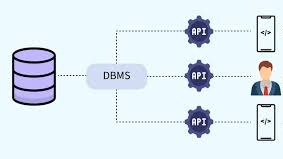
In modern applications, data is the most valuable asset. A Database Management System (DBMS) is software that stores, organizes, and manages data efficiently, enabling applications to retrieve, update, and secure information reliably. Understanding DBMS is essential for developers, data analysts, and IT professionals.

What Is a Database Management System (DBMS)?

A DBMS is a software system that allows users to:

  • Store large amounts of structured or unstructured data

  • Retrieve information quickly and accurately

  • Update data while maintaining consistency

  • Secure data from unauthorized access

  • Manage concurrent access by multiple users

Example: MySQL, PostgreSQL, Oracle, MongoDB

Key Components of a DBMS

  1. Database Engine

    • Handles data storage, retrieval, and management

    • Ensures fast queries and reliable performance

  2. Database Schema

    • Defines the structure of data (tables, columns, relationships)

  3. Query Processor

    • Interprets and executes user queries (SQL / NoSQL queries)

  4. Transaction Management

    • Ensures ACID properties: Atomicity, Consistency, Isolation, Durability

  5. Security Management

    • Controls user access and permissions

    • Protects data from unauthorized users

Types of Database Management Systems

1. Relational DBMS (RDBMS)

  • Uses tables with rows and columns

  • Supports SQL for querying data

  • Ideal for structured data and transactional applications

Examples: MySQL, PostgreSQL, Oracle

2. NoSQL DBMS

  • Stores data in flexible formats (documents, key-value, graph, column)

  • Suitable for unstructured or large-scale data

  • High performance and scalability

Examples: MongoDB, Firebase, Cassandra

3. Hierarchical DBMS

  • Data is organized in a tree structure

  • Each record has a parent-child relationship

Example: IBM IMS

4. Network DBMS

  • Data is represented as a graph with nodes and connections

  • Allows multiple parent-child relationships

Example: IDMS

Advantages of Using a DBMS

  • Efficient data storage and retrieval

  • Reduces data redundancy

  • Ensures data integrity and consistency

  • Supports multi-user access

  • Provides security and backup solutions

Real-World Applications of DBMS

  • E-Commerce Platforms: Storing user accounts, products, and transactions

  • Banking Systems: Managing accounts, transactions, and loans

  • Healthcare: Patient records, appointments, and prescriptions

  • Education: Student data, courses, and results

  • Social Media: User profiles, posts, and messaging

Choosing the Right DBMS

  • For structured, transactional data → SQL/RDBMS

  • For large-scale, flexible data → NoSQL

  • For complex relationships → Hierarchical or Network DBMS

1

Types of Databases

Types of Databases

Types of Databases

Databases are essential for storing, organizing, and managing data efficiently in modern applications. Depending on how data is structured and accessed, databases can be classified into different types. Understanding these types helps developers and businesses choose the right database for the right purpose.

1. Relational Databases (RDBMS)

Relational databases organize data into tables with rows and columns. Each table has a primary key to uniquely identify records and can be linked to other tables using foreign keys.

Key Features:

  • Structured data storage

  • SQL (Structured Query Language) for querying

  • ACID properties (Atomicity, Consistency, Isolation, Durability)

Examples: MySQL, PostgreSQL, Oracle, Microsoft SQL Server

Use Cases: Banking systems, e-commerce platforms, enterprise applications

2. NoSQL Databases

NoSQL databases handle unstructured, semi-structured, or flexible data. They are designed for high scalability, speed, and real-time applications.

Types of NoSQL Databases:

  • Document-based: MongoDB, CouchDB

  • Key-Value: Redis, DynamoDB

  • Column-based: Cassandra, HBase

  • Graph-based: Neo4j, ArangoDB

Use Cases: Social media, IoT applications, big data analytics

3. Hierarchical Databases

Hierarchical databases organize data in a tree-like structure, where each record has a single parent. This model is fast and efficient for certain types of queries but less flexible for complex relationships.

Examples: IBM IMS

Use Cases: Telecom systems, airline reservation systems

4. Network Databases

Network databases represent data as a graph of records connected by relationships, allowing many-to-many relationships. They are more flexible than hierarchical databases.

Examples: IDMS, Integrated Data Store

Use Cases: Complex systems with interconnected data, such as supply chains

5. Cloud Databases

Cloud databases are hosted on cloud platforms rather than local servers. They offer scalability, high availability, and managed services.

Examples: Amazon RDS, Google Firebase, Microsoft Azure SQL

Use Cases: Web applications, mobile apps, global-scale systems

6. In-Memory Databases

In-memory databases store data directly in RAM, providing extremely fast read/write speeds.

Examples: Redis, SAP HANA

Use Cases: Real-time analytics, caching, session management

2

Why DBMS is Important

Why DBMS is Important

Why DBMS Is Important

In today’s data-driven world, efficiently managing and using data is critical for any organization. A Database Management System (DBMS) provides a structured and secure way to store, retrieve, and manage data, making it an essential component of modern software applications.

1. Efficient Data Management

A DBMS allows organizations to store large volumes of data in an organized manner. It provides tools for:

  • Adding, updating, and deleting data easily

  • Searching and retrieving information quickly

  • Managing data consistently across multiple applications

Without a DBMS, managing data manually or using simple file systems can become chaotic and error-prone.

2. Data Security

Data is often sensitive and critical to business operations. DBMS ensures:

  • User authentication and access control

  • Encryption of sensitive information

  • Prevention of unauthorized data access

This protects both user data and organizational data from security breaches.

3. Data Integrity and Accuracy

A DBMS enforces rules that ensure data is consistent, accurate, and reliable:

  • Prevents duplicate or invalid entries

  • Maintains relationships between data (using constraints and keys)

  • Ensures updates are applied correctly across the database

This is particularly important in industries like banking, healthcare, and finance, where errors can have serious consequences.

4. Multi-User Support

Modern applications often have multiple users accessing the database simultaneously. DBMS provides:

  • Concurrency control

  • Conflict resolution

  • Transaction management

This allows many users to work on the database at the same time without data corruption.

5. Backup and Recovery

A DBMS provides mechanisms to backup data regularly and recover it in case of failure:

  • Protects against data loss due to hardware failures, software bugs, or human errors

  • Ensures business continuity

6. Scalability and Flexibility

As businesses grow, so does the amount of data. A DBMS allows:

  • Handling large-scale data efficiently

  • Integrating new applications and data sources easily

  • Adapting to changing business requirements

7. Simplifies Data Analysis

A DBMS supports advanced querying and reporting:

  • SQL allows complex searches, filtering, and aggregations

  • Supports analytics and business intelligence tools

  • Helps make data-driven decisions

Real-World Example

  • E-commerce: Managing users, products, orders, and payments

  • Banking: Handling transactions, account information, and customer details

  • Healthcare: Storing patient records, appointments, and medical histories

  • Education: Managing student data, courses, and grades

Share this article