We wrote this so you can see how the topic works in practice. You can read it from anywhere. If you want lab practice next, we will help you pick a course in counselling.
Importance of Projects in Learning Programming
While learning programming theory is essential, working on projects is what transforms knowledge into practical skills. Projects allow learners to apply concepts, solve real-world problems, and gain hands-on experience, which is crucial for mastering programming.
1. Practical Application of Knowledge
Projects help bridge the gap between theory and practice. Concepts like loops, functions, data structures, and algorithms are better understood when applied in real-world scenarios.
Example: Creating a to-do list app allows learners to implement CRUD operations, user interfaces, and data storage, reinforcing coding concepts practically.
2. Enhances Problem-Solving Skills
Working on projects exposes learners to challenges and unexpected issues. They learn to:
Break problems into smaller parts
Debug and troubleshoot errors
Optimize solutions for better performance
These experiences strengthen logical thinking and programming efficiency.
3. Encourages Creativity and Innovation
Projects provide the freedom to experiment and innovate. Learners can design unique solutions, integrate different technologies, and explore creative ideas.
Example: Developing a game or interactive web app encourages creativity while honing technical skills.
4. Builds a Strong Portfolio
Completed projects serve as tangible proof of skills for potential employers or clients. A portfolio showcasing projects demonstrates:
Technical proficiency
Problem-solving abilities
Initiative and practical experience
This significantly improves employability and confidence during interviews.
5. Facilitates Collaboration and Teamwork
Many projects involve teamwork, teaching learners how to collaborate using tools like Git, version control systems, and project management platforms. These skills are vital for real-world software development environments.
6. Prepares for Real-World Development
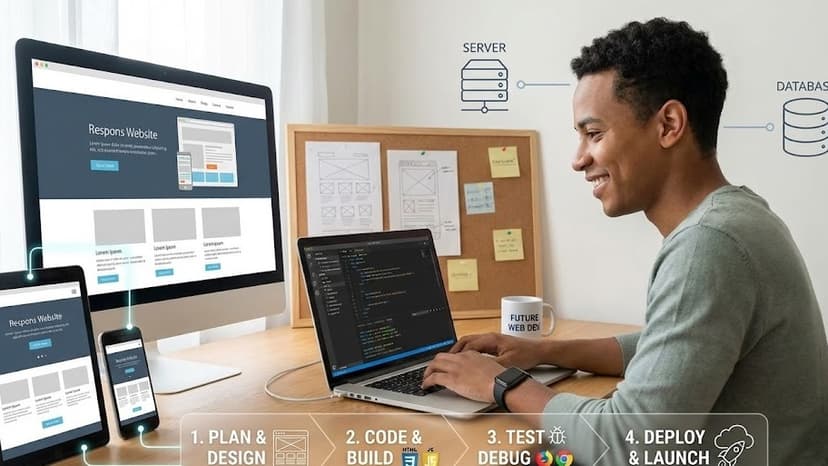
Projects simulate professional software development by involving:
Requirement analysis
Design and architecture
Implementation and testing
Deployment and maintenance
This prepares learners to handle real-world challenges and professional software projects effectively.
Hands-On Learning
Hands-On Learning
Hands-on learning is a critical approach in programming education, emphasizing learning by doing. Instead of just reading about concepts or watching tutorials, learners actively engage in coding, experiments, and real-world projects, which deepens understanding and builds practical skills.
1. Reinforces Theoretical Knowledge
Writing code, building applications, and experimenting with projects helps learners internalize concepts better than passive learning.
Example: Practicing loops, functions, or algorithms in a small project makes these concepts intuitive and easier to recall.
2. Develops Problem-Solving Skills
Hands-on learning exposes learners to real challenges, errors, and unexpected scenarios. It teaches them to:
Debug code effectively
Analyze and break down problems
Implement logical and efficient solutions
These skills are invaluable in professional software development.
3. Encourages Experimentation and Innovation
Practical learning allows learners to try new ideas and experiment without fear of failure.
Example: Testing different algorithms or app features helps discover optimal solutions and fosters creative thinking.
Hands-on experience often sparks innovation and unique approaches to coding challenges.
4. Builds Confidence and Independence
By actively coding and completing projects, learners gain confidence in their abilities. They become comfortable handling errors, troubleshooting issues, and making independent decisions during development.
5. Prepares for Real-World Scenarios
Hands-on learning simulates professional environments, including:
Writing modular and maintainable code
Using version control tools like Git
Collaborating on team projects
This prepares learners for actual software development workflows and industry expectations.
6. Improves Retention and Engagement
Active participation in coding exercises and projects increases knowledge retention and keeps learners engaged. Experiential learning is more memorable than reading or passive observation.
Career Impact
Career Impact
Learning programming, software engineering, and emerging technologies has a profound impact on one’s career. Beyond technical knowledge, these skills shape employability, professional growth, and long-term success in a technology-driven world.
1. High Demand for Skilled Professionals
The technology sector continues to grow rapidly, creating a high demand for professionals skilled in:
Software development and coding
Mobile app development (Android/iOS)
Data analysis, AI, and machine learning
Cloud computing, cybersecurity, and networking
These skills make learners highly employable across industries worldwide.
2. Better Job Opportunities and Salary Prospects
Professionals with strong programming and problem-solving skills can access:
Entry-level developer roles
Specialized roles like AI engineer, data analyst, or DevOps engineer
Competitive salary packages due to skill scarcity and industry demand
Strong technical skills often translate into faster career progression.
3. Versatility Across Industries
Programming and technology skills are not limited to IT companies. Industries such as:
Finance and banking
Healthcare and biotechnology
E-commerce and retail
Manufacturing and logistics
…all rely heavily on technology, opening diverse career pathways for skilled professionals.
4. Entrepreneurship and Innovation
Knowledge of coding and software engineering empowers individuals to create their own products and startups. From mobile apps to web platforms and automation tools, programming skills enable innovation and entrepreneurial ventures.
5. Strengthened Problem-Solving and Decision-Making
Programming enhances analytical thinking, logical reasoning, and problem-solving skills that are valuable in any role. Professionals with these skills can:
Solve complex challenges efficiently
Make data-driven decisions
Lead projects and teams effectively
6. Long-Term Career Growth
Continuous learning and keeping up with emerging technologies ensure that professionals stay relevant. Skills in AI, IoT, cloud computing, and cybersecurity open doors for leadership roles, specialized positions, and international opportunities.
Who this is for
This is for students, job seekers, and working learners who want a clearer picture of the skill before they pick a course.
How we help you after you read
We help you see a career direction before you pick a course. You can start from where you are, including if you are new to IT. In lab we practise the role, not only names of tools. After a course, we stay with you until you get a job, based on your performance.
Share this article
What you can do next
If this topic is the skill you want to practise, we can map it to a course. Visit an Ahmedabad centre with your parents, or join through online admission if you live outside Ahmedabad.
Short answers about who this is for, what to do next, and how to talk to us.
Who should read Importance of Projects in Learning Programming?
This is for students, job seekers, and working learners who want a clearer picture of the skill before they pick a course. You can read it from anywhere. If you want lab practice next, we will help you pick a course.
Do I need to visit Ahmedabad to use this article?
No, you can read it from anywhere. If you want to learn with us next, we warmly welcome you and your parents to visit one of our Ahmedabad centres — Maninagar, Nikol, or Vatva. If you live outside Ahmedabad, you can join through online admission with a counselling call.
Is this article the same as joining a CEC course?
No. We wrote this so you can understand the topic in plain language. A course is where you practise in lab, build work, and get feedback.
What should I do after I finish reading?
If this is the skill you want to practise, book counselling or open a related course. For this topic, you can start with C++ Programming, C# Programming, Advanced Excel Mastery for MBA Students: Analytics, Finance & Reporting, or browse all courses.
Can a parent use this to decide for a child?
Yes. You can read it together and then book counselling. School children of any grade start with counselling first — we do not enrol a child into a full career track without that conversation.
Can I start this skill after 10th or 12th if I did not pass?
After 10th or 12th, anyone can apply — pass, not pass, or a gap year, and any stream. Counselling is where we match the skill in this article to a course you can actually attend.
Will reading this get me a job?
No. An article is for understanding. If you join a course, complete practical work, and sit interviews, we stay with you until you get a job, based on your performance.
How do I talk to CEC about this topic?
Book counselling and mention this article, call +91 75740 10176, WhatsApp the same number, or email info@cecyours.org. In Ahmedabad, we would be glad to welcome you and your parents at a centre; outside Ahmedabad, we will set up a counselling call.