Back to Blogs

Importance of Version Control Using Git

December 13, 2025
4 min read
Importance of Version Control Using Git

We wrote this so you can see how the topic works in practice. You can read it from anywhere. If you want lab practice next, we will help you pick a course in counselling.

Git is a version control system that helps developers manage code changes efficiently. It allows teams to collaborate, track history, and roll back changes safely.

What is Git?

What is Git?

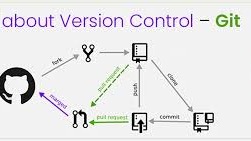
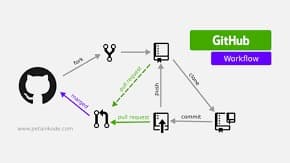
Git tracks changes in code and supports team collaboration.

Why Git is Important

Why Git is Important

Git prevents code conflicts and improves productivity.

Who this is for

This is for students, job seekers, and working learners who want a clearer picture of the skill before they pick a course.

How we help you after you read

We help you see a career direction before you pick a course. You can start from where you are, including if you are new to IT. In lab we practise the role, not only names of tools. After a course, we stay with you until you get a job, based on your performance.

Share this article

What you can do next

If this topic is the skill you want to practise, we can map it to a course. You can book counselling or open a course. A branch visit is not required outside Ahmedabad.

Questions about this article

Short answers about who this is for, what to do next, and how to talk to us.

  • Who should read Importance of Version Control Using Git?

    This is for students, job seekers, and working learners who want a clearer picture of the skill before they pick a course. You can read it from anywhere. If you want lab practice next, we will help you pick a course.

  • Do I need to visit Ahmedabad to use this article?

    No. You can read from anywhere. Our centres are in Ahmedabad only — Maninagar, Nikol, and Vatva. A visit is optional and is not required outside Ahmedabad.

  • Is this article the same as joining a CEC course?

    No. We wrote this so you can understand the topic in plain language. A course is where you practise in lab, build work, and get feedback.

  • What should I do after I finish reading?

    If this is the skill you want to practise, book counselling or open a related course. For this topic, you can start with AI Development using Python (Job Oriented), Advanced Excel for Banking Sales Managers, C Programming, or browse all courses.

  • Can a parent use this to decide for a child?

    Yes. You can read it together and then book counselling. School children of any grade start with counselling first — we do not enrol a child into a full career track without that conversation.

  • Can I start this skill after 10th or 12th if I did not pass?

    After 10th or 12th, anyone can apply — pass, not pass, or a gap year, and any stream. Counselling is where we match the skill in this article to a course you can actually attend.

  • Will reading this get me a job?

    No. An article is for understanding. If you join a course, complete practical work, and sit interviews, we stay with you until you get a job, based on your performance.

  • How do I talk to CEC about this topic?

    Book counselling and mention this article, call +91 75740 10176, WhatsApp the same number, or email info@cecyours.org. You do not need to visit a branch to start.

More to Explore

What is Version Control and Why Git is Important?
Dec 15, 2025

What is Version Control and Why Git is Important?

Version control systems help track changes in code and collaborate efficiently. Git is the most popular version control tool used by developers to manage code history and teamwork.

Read Article
Importance of Practical Training in IT Education
Dec 13, 2025

Importance of Practical Training in IT Education

Importance of Practical Training in IT Education

In the fast-paced world of Information Technology (IT), theoretical knowledge alone is not enough. Practical training bridges the gap between classroom learning and real-world application, preparing students and professionals to succeed in the industry.

1. Hands-On Experience

Practical training allows learners to apply theoretical concepts in real scenarios:

  • Writing code, developing applications, and building projects

  • Working with real databases, servers, and APIs

  • Debugging and solving actual problems

Example: Learning Python in theory is useful, but building a real web application using Django or Flask teaches problem-solving in a practical environment.

2. Understanding Real-World Scenarios

IT environments are dynamic, and practical training exposes learners to:

  • Industry-standard tools and technologies

  • Workflow and project management practices

  • Real-world challenges such as debugging, performance optimization, and security concerns

This prepares students for the workplace, not just exams.

3. Enhanced Problem-Solving Skills

Practical work helps learners think critically and solve problems efficiently:

  • Writing code that actually runs

  • Testing and improving solutions

  • Troubleshooting errors and optimizing performance

Such experience builds confidence in handling complex IT tasks.

4. Collaboration and Teamwork

Many practical IT projects involve team-based work, which teaches:

  • Effective communication and coordination

  • Task management and responsibility sharing

  • Version control and collaborative coding (Git/GitHub)

These are essential skills for modern IT workplaces.

5. Familiarity with Industry Tools

Practical training exposes students to tools and platforms used in the IT industry:

  • IDEs like VS Code, PyCharm, or IntelliJ

  • Databases like MySQL, MongoDB, PostgreSQL

  • Cloud platforms like AWS, Azure, Google Cloud

  • Project management and collaboration tools like Jira, Trello, Slack

This makes students industry-ready from day one.

6. Boosts Employability

Employers prefer candidates with real-world experience. Practical training helps learners:

  • Showcase project portfolios

  • Demonstrate problem-solving and technical skills

  • Adapt quickly to organizational workflows

This significantly improves job prospects.

7. Encourages Innovation

Working on practical projects inspires creativity:

  • Building unique applications or solutions

  • Experimenting with new technologies

  • Understanding the impact of IT solutions in real life

Read Article
Why Logical Thinking Matters in Programming
Dec 15, 2025

Why Logical Thinking Matters in Programming

Why Logical Thinking Matters in Programming

Logical thinking is the backbone of programming. It allows developers to break down problems, understand requirements, and create efficient solutions. Without logical thinking, writing effective, error-free code becomes extremely difficult.

1. Structuring Code Effectively

Programming requires organizing instructions in a sequence that the computer can execute correctly. Logical thinking helps developers:

  • Plan the sequence of operations

  • Decide on the right algorithms and data structures

  • Avoid redundant or inefficient code

Well-structured code is easier to maintain, debug, and scale.

2. Problem Decomposition

Complex problems in programming often cannot be solved all at once. Logical thinking allows programmers to divide problems into smaller, manageable tasks, making them easier to understand and solve.

Example:
Creating a shopping cart system involves multiple smaller tasks: adding items, calculating totals, applying discounts, and processing payments. Logical thinking helps address each task systematically.

3. Debugging and Troubleshooting

Errors and bugs are inevitable in programming. Logical thinking enables developers to:

  • Identify the root cause of issues

  • Trace errors step by step

  • Implement solutions without introducing new problems

This skill saves time and reduces frustration during development.

4. Optimizing Solutions

Logical thinking allows programmers to evaluate multiple approaches and choose the most efficient solution. This improves:

  • Execution speed

  • Memory usage

  • Overall program performance

Optimization is critical for creating professional-grade software.

5. Enhancing Creativity in Coding

Though logical thinking is structured, it also enhances creativity. By understanding how systems work, programmers can innovate new solutions, combine technologies, and solve problems in unique ways.

6. Real-World Applications

Logical thinking in programming extends to real-world problem-solving:

  • Automating repetitive tasks

  • Designing data-driven systems

  • Developing algorithms for AI and machine learning

It ensures that programming skills translate into practical, impactful solutions.

Read Article