Get Job-Ready with Industry IT TrainingEnroll Now!

Back to Blogs
Featured

Introduction to Full Stack Development

December 15, 2025
8 min read
Introduction to Full Stack Development

Introduction to Full Stack Development

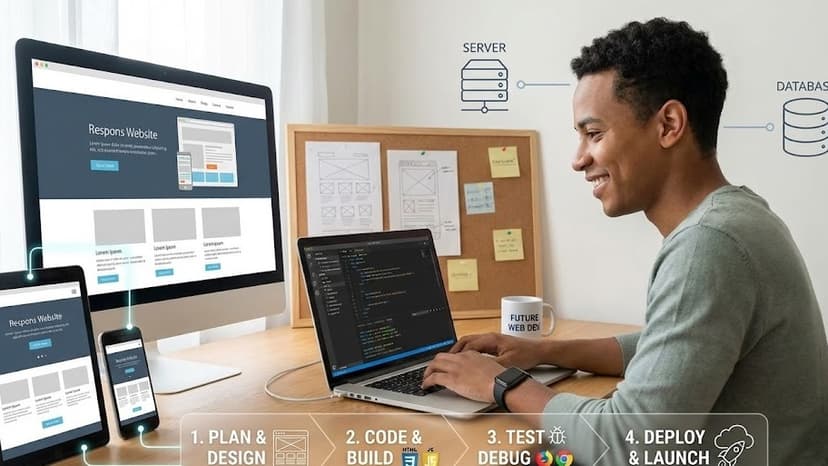
Full-stack development refers to the practice of building both the frontend (client-side) and backend (server-side) of a web application. A full-stack developer has the skills and knowledge to handle all layers of a web project, from designing interactive user interfaces to managing databases and server logic.

1. What Does Full Stack Development Involve?

Full-stack development combines:

  • Frontend Development: Creating responsive and interactive interfaces that users interact with

  • Backend Development: Handling server-side logic, databases, and APIs

  • Integration: Connecting frontend and backend components seamlessly to build fully functional applications

2. Skills Required for Full Stack Developers

A full-stack developer needs proficiency in both frontend and backend technologies:

Frontend Skills:

  • HTML, CSS, JavaScript

  • Frameworks/Libraries: React.js, Angular, Vue.js

  • UI/UX principles and responsive design

Backend Skills:

  • Programming languages: Python, Node.js, Java, PHP

  • Frameworks: Django, Flask, Express.js, Spring Boot

  • Database management: MySQL, PostgreSQL, MongoDB

Additional Skills:

  • API development and integration

  • Version control systems (Git)

  • Deployment and cloud platforms

3. Advantages of Full Stack Development

  • Versatility: Can handle both frontend and backend tasks

  • Efficiency: Reduces the need for multiple specialists, allowing faster development

  • Better Collaboration: Understands the workflow of both client and server sides

  • Problem Solving: Can identify and fix issues across the entire stack

4. Real-World Applications

  • Building a complete e-commerce website with product listings, a shopping cart, and payment integration

  • Developing a social media platform with user profiles, feeds, and notifications

  • Creating SaaS applications with dashboards, analytics, and backend services

1

Frontend vs Backend

Frontend vs Backend

Frontend vs Backend

In web development, understanding the difference between frontend and backend is crucial. Both are essential for building functional and interactive applications, but they focus on different aspects of a system.

1. Frontend Development

Frontend refers to the client-side of an application—the part users directly interact with.

Key Points:

  • Focuses on UI/UX, visual design, and interactivity

  • Implements responsive design for different devices

  • Uses HTML, CSS, JavaScript and frameworks like React.js, Angular, or Vue.js

Example: A website’s navigation menu, buttons, forms, and dynamic content displayed to users

2. Backend Development

Backend refers to the server-side of an application—the part users don’t see.

Key Points:

  • Focuses on data storage, server logic, and application functionality

  • Manages databases, APIs, and authentication

  • Uses languages like Python, Node.js, Java, PHP, and frameworks like Django, Flask, or Express.js

Example: Processing user login, storing orders in a database, and handling payment transactions

3. Collaboration Between Frontend and Backend

Frontend and backend developers work together to:

  • Ensure smooth data flow between the user interface and the server

  • Provide a seamless user experience while maintaining security and performance

  • Build complete applications that are functional, responsive, and reliable

2

Why Full Stack is in Demand

Why Full Stack is in Demand

Why Full Stack Development is in Demand

Full-stack development has become one of the most sought-after skills in the tech industry. Companies value developers who can handle both frontend and backend tasks, making full-stack professionals versatile, efficient, and highly valuable.

1. Versatility in Skills

Full-stack developers are proficient in:

  • Frontend technologies (HTML, CSS, JavaScript, React.js)

  • Backend technologies (Python, Node.js, Django, databases)

This versatility allows them to work on all layers of an application, reducing the need for multiple specialists and improving project efficiency.

2. Cost-Effective for Companies

Hiring full-stack developers allows companies to:

  • Reduce team size by employing developers who can handle end-to-end development

  • Accelerate project timelines since one developer can manage multiple aspects of development

  • Optimize resources without compromising on quality

3. Faster Development and Prototyping

Full-stack developers can:

  • Build working prototypes quickly

  • Integrate frontend and backend efficiently

  • Test and deploy applications faster than relying on separate specialists

This speed is crucial for startups and tech companies that need to iterate and innovate rapidly.

4. Better Collaboration

Full stack developers understand the workflow of both frontend and backend teams, making them effective communicators and problem-solvers. They can bridge the gap between UI/UX designers and backend engineers, ensuring smooth integration and fewer misunderstandings.

5. High Demand Across Industries

Full-stack developers are needed in:

  • Web and mobile app development

  • E-commerce and SaaS platforms

  • Startups and tech companies requiring scalable solutions

  • Enterprises modernizing legacy systems

6. Career Growth and Flexibility

Full-stack developers enjoy:

  • Higher salary potential due to their broad skill set

  • Opportunities to transition into an architect, project manager, or CTO role

  • Flexibility to work on different types of projects, from web apps to cloud-based platforms

Share this article