Back to Blogs

What is Software Architecture?

December 15, 2025
6 min read
What is Software Architecture?

We wrote this so you can see how the topic works in practice. You can read it from anywhere. If you want lab practice next, we will help you pick a course in counselling.

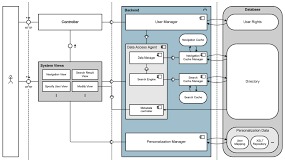
Software architecture defines the high-level structure of a system, including components, relationships, and design principles. Good architecture ensures scalability, maintainability, and performance.

Architecture Patterns

Architecture Patterns

Common patterns include MVC, layered, and microservices.

Why Architecture Matters

Why Architecture Matters

It reduces future development and maintenance costs

Who this is for

This is for students, job seekers, and working learners who want a clearer picture of the skill before they pick a course.

How we help you after you read

We help you see a career direction before you pick a course. You can start from where you are, including if you are new to IT. In lab we practise the role, not only names of tools. After a course, we stay with you until you get a job, based on your performance.

Share this article

What you can do next

If this topic is the skill you want to practise, we can map it to a course. You can book counselling or open a course. A branch visit is not required outside Ahmedabad.

Questions about this article

Short answers about who this is for, what to do next, and how to talk to us.

  • Who should read What is Software Architecture??

    This is for students, job seekers, and working learners who want a clearer picture of the skill before they pick a course. You can read it from anywhere. If you want lab practice next, we will help you pick a course.

  • Do I need to visit Ahmedabad to use this article?

    No. You can read from anywhere. Our centres are in Ahmedabad only — Maninagar, Nikol, and Vatva. A visit is optional and is not required outside Ahmedabad.

  • Is this article the same as joining a CEC course?

    No. We wrote this so you can understand the topic in plain language. A course is where you practise in lab, build work, and get feedback.

  • What should I do after I finish reading?

    If this is the skill you want to practise, book counselling or open a related course. For this topic, you can start with Full Stack Software Programmer, Android App Development, Graphic Designing & UI/UX with AI Tools, or browse all courses.

  • Can a parent use this to decide for a child?

    Yes. You can read it together and then book counselling. School children of any grade start with counselling first — we do not enrol a child into a full career track without that conversation.

  • Can I start this skill after 10th or 12th if I did not pass?

    After 10th or 12th, anyone can apply — pass, not pass, or a gap year, and any stream. Counselling is where we match the skill in this article to a course you can actually attend.

  • Will reading this get me a job?

    No. An article is for understanding. If you join a course, complete practical work, and sit interviews, we stay with you until you get a job, based on your performance.

  • How do I talk to CEC about this topic?

    Book counselling and mention this article, call +91 75740 10176, WhatsApp the same number, or email info@cecyours.org. You do not need to visit a branch to start.

More to Explore

What is Software Engineering and Why It Matters
Dec 15, 2025

What is Software Engineering and Why It Matters

What is Software Engineering and Why It Matters

Software engineering is the discipline of designing, developing, testing, and maintaining software systems in a structured and systematic way. It combines programming skills with engineering principles to create reliable, efficient, and scalable software solutions that meet user and business needs.

Understanding Software Engineering

Software engineering goes beyond writing code. It focuses on planning, analyzing requirements, designing system architecture, implementing solutions, testing for quality, and maintaining software over time. This structured approach ensures that software works correctly, remains secure, and can adapt to future changes.

Key Components of Software Engineering

Software engineering involves multiple stages, including:

  • Requirement analysis and planning

  • Software design and architecture

  • Coding and implementation

  • Testing and quality assurance

  • Deployment and maintenance

Each stage plays a critical role in delivering high-quality software products.

Why Software Engineering Matters

Software engineering is essential because modern society relies heavily on software. From mobile applications and websites to banking systems and healthcare platforms, software engineering ensures these systems are safe, efficient, and reliable.

Improves Software Quality and Reliability

By following structured methodologies and best practices, software engineers reduce errors, improve performance, and enhance system reliability. Proper testing and maintenance ensure software continues to function as expected even as user demands grow.

Supports Scalability and Growth

Well-engineered software can handle increasing users, data, and features without breaking down. Software engineering principles help create scalable systems that grow alongside businesses and organizations.

Enhances Security and Data Protection

Security is a critical concern in modern software development. Software engineering emphasizes secure coding practices, data protection, and risk management to safeguard sensitive information and prevent cyber threats.

Enables Innovation and Digital Transformation

Software engineering drives innovation by enabling the development of new technologies, automation, and digital solutions. It plays a key role in digital transformation across industries such as finance, healthcare, education, and e-commerce.

Creates Career Opportunities

Software engineering is one of the most in-demand career fields. Professionals can pursue roles such as:

  • Software Developer

  • Software Engineer

  • System Architect

  • QA Engineer

  • DevOps Engineer

These roles offer strong career growth, job stability, and global opportunities.

Read Article
Database Management Systems – A Complete Overview
Dec 13, 2025

Database Management Systems – A Complete Overview

Database Management Systems – A Complete Overview

In modern applications, data is the most valuable asset. A Database Management System (DBMS) is software that stores, organizes, and manages data efficiently, enabling applications to retrieve, update, and secure information reliably. Understanding DBMS is essential for developers, data analysts, and IT professionals.

What Is a Database Management System (DBMS)?

A DBMS is a software system that allows users to:

  • Store large amounts of structured or unstructured data

  • Retrieve information quickly and accurately

  • Update data while maintaining consistency

  • Secure data from unauthorized access

  • Manage concurrent access by multiple users

Example: MySQL, PostgreSQL, Oracle, MongoDB

Key Components of a DBMS

  1. Database Engine

    • Handles data storage, retrieval, and management

    • Ensures fast queries and reliable performance

  2. Database Schema

    • Defines the structure of data (tables, columns, relationships)

  3. Query Processor

    • Interprets and executes user queries (SQL / NoSQL queries)

  4. Transaction Management

    • Ensures ACID properties: Atomicity, Consistency, Isolation, Durability

  5. Security Management

    • Controls user access and permissions

    • Protects data from unauthorized users

Types of Database Management Systems

1. Relational DBMS (RDBMS)

  • Uses tables with rows and columns

  • Supports SQL for querying data

  • Ideal for structured data and transactional applications

Examples: MySQL, PostgreSQL, Oracle

2. NoSQL DBMS

  • Stores data in flexible formats (documents, key-value, graph, column)

  • Suitable for unstructured or large-scale data

  • High performance and scalability

Examples: MongoDB, Firebase, Cassandra

3. Hierarchical DBMS

  • Data is organized in a tree structure

  • Each record has a parent-child relationship

Example: IBM IMS

4. Network DBMS

  • Data is represented as a graph with nodes and connections

  • Allows multiple parent-child relationships

Example: IDMS

Advantages of Using a DBMS

  • Efficient data storage and retrieval

  • Reduces data redundancy

  • Ensures data integrity and consistency

  • Supports multi-user access

  • Provides security and backup solutions

Real-World Applications of DBMS

  • E-Commerce Platforms: Storing user accounts, products, and transactions

  • Banking Systems: Managing accounts, transactions, and loans

  • Healthcare: Patient records, appointments, and prescriptions

  • Education: Student data, courses, and results

  • Social Media: User profiles, posts, and messaging

Choosing the Right DBMS

  • For structured, transactional data → SQL/RDBMS

  • For large-scale, flexible data → NoSQL

  • For complex relationships → Hierarchical or Network DBMS

Read Article
How Software Testing Improves Product Quality
Dec 15, 2025

How Software Testing Improves Product Quality

How Software Testing Improves Product Quality

Software testing is a critical step in the software development lifecycle that ensures applications are reliable, secure, and perform as expected. By systematically identifying and fixing defects, software testing enhances product quality, user satisfaction, and overall business success.

1. Detecting and Fixing Bugs Early

  • Early Identification: Testing during development helps catch errors before they escalate into major issues.

  • Reduced Costs: Fixing defects early is less expensive than post-release corrections.

  • Improved Stability: Applications run smoothly with minimal crashes or errors.

2. Ensuring Functionality

  • Requirement Validation: Testing verifies that the software meets functional requirements.

  • Consistency: Ensures all features work as intended across different devices and platforms.

  • User Satisfaction: A functional application delivers a seamless and reliable user experience.

3. Enhancing Performance

  • Load and Stress Testing: Identifies how software behaves under high traffic or data volume.

  • Optimization: Helps improve response times, efficiency, and scalability of applications.

  • Reliability: Performance testing ensures that software can handle real-world usage conditions.

4. Improving Security

  • Vulnerability Testing: Detects security flaws that could compromise data or system integrity.

  • Data Protection: Ensures compliance with data privacy regulations and industry standards.

  • User Trust: Secure applications build confidence among users and clients.

5. Supporting Continuous Improvement

  • Feedback Loop: Testing provides valuable insights to developers for iterative improvements.

  • Quality Assurance: Helps maintain high standards across software releases.

  • Innovation Enablement: Reliable software allows teams to introduce new features without compromising quality.

6. Real-World Impact

  • E-commerce platforms reduce transaction errors and improve checkout reliability.

  • Mobile applications minimize crashes, improving user retention and ratings.

  • Enterprise software ensures accurate data processing and reporting for business decisions.

Read Article