A task on paper first
For 192.168.10.0/29, write the network, the first host, the last host, and the broadcast. Across our centres we have conducted 20,000+ of training. This page of the slip is that count, done before the keyboard.
Networking here means one bench you can explain: a cable with a link light, two lab PCs in a small address block, and one packet whose source and destination match the slip you wrote. After 12th, in college, or changing careers, you practise that with us. At Computer Education And Cybernetics (CEC) a mentor checks the numbers before the note counts. The bench is about two minutes from the railway station.
Or reach us directly
+91 75740 10176 · info@cecyours.org
One /29 slip for the bench
You connect them, you give them addresses from one small block, and you prove it with one packet. We put that switch and those two PCs in front of you before any plan is typed.
Computer networking on a bench means a cable with a link light, IP addresses from one subnet, and a packet you can point at. A subnet mask splits each address into a network name and a host name. A /29 has eight addresses and six usable hosts. The switch carries traffic inside that subnet. The router is the gateway when a packet must leave it. Computer Education And Cybernetics (CEC) teaches this on lab gear, not only on a diagram.
A straight-through cable joins a PC to a switch. You seat both ends and look for the link light. If the light stays off, you stop there. Addresses cannot fix a cable that never connected.
TCP/IP is the set of rules that move data as packets, each with a source and a destination address. A subnet mask says which bits name the network and which name the host. On a /29, eight addresses exist and six can be given to machines.
Two PCs on the same subnet talk through the switch. The router is the gateway when a packet must leave that subnet. You type the gateway address you already calculated. You do not invent a second plan on the device.
Packet analysis here means you open one capture from the lab and name the source, the destination, and what the packet was doing. If those addresses are not on your slip, the note is not finished.
A task on paper first
For 192.168.10.0/29, write the network, the first host, the last host, and the broadcast. Across our centres we have conducted 20,000+ of training. This page of the slip is that count, done before the keyboard.
The cable is already good. The skill is noticing an address that left the block.
The bench needs two PCs and a gateway. You write 192.168.10.0 as the network, .1 and .2 as the PCs, .6 as the gateway, and .7 as the broadcast. Those four lines are the slip.
Both link lights are on. You ping from .1 to .2. It fails. The second PC was typed as 192.168.10.8, which is the next network, not a host in this /29.
The cable is fine. The address is outside the block. You correct .8 to .2 and ping again. The reply arrives. You do not start replacing the switch.
The slip, the wrong address, the corrected address, and one packet whose source is .1 and destination is .2. That packet is the proof the two PCs share the subnet.
An honest limit: this bench is two PCs, one switch, and one gateway. Splitting a building into rooms of different sizes, and the VLANs that keep those rooms apart, is the Ahmedabad networking page. Rules between networks come after, on the network security course.
Two changes are already on ordinary networks. You still write the slip and still read one packet. A drafted split can mis-count the hosts, so you count them before you type.
Offices hand out addresses automatically. You still need the slip, because an automatic address from the wrong block looks “connected” and still cannot reach the bench.
Cloud screens hide the wire. A packet still has a source and a destination. Reading that pair stays useful when the picture of the cable is gone.
Everyday networking is shifting as addresses are handed out automatically and as consoles hide the cable. The durable skill is knowing when an address sits in the wrong block, and naming the source and destination on one packet. CEC trains that check on the bench.
About 80% of our training is practical. A mentor reads the slip the way a reviewer would: Are the hosts inside the block, and does the packet match the ping you made?
After 12th anyone can apply, from any stream. College students who want lab time beyond a diagram, and career changers moving into support work, start here too. School learners of any grade start with counseling before a course.
You stay on two PCs, one switch, and one gateway. A mentor sends the slip back when a host address is outside the block, or when the packet you marked is not the ping you just made.
You confirm the link light, type only the addresses on the slip, and circle one packet. About 80% of training time is practical. This hour is that circle.
A mentor asks for the six usable addresses. If both PCs and the gateway do not all sit inside that list, the mask goes back. You do not type a plan you have not counted.
Computer Education And Cybernetics (CEC) teaches this bench as networking practice: one cable, one /29 slip, and one marked packet. You start with counseling. We stay with you until you get a job, based on your performance. The wider path, including larger subnet plans, is the Ahmedabad networking page.
When the addresses make sense, security work has something to stand on. That next step at this centre is the cyber security course at this centre.
The address slip and the marked packet are the proof you can show. We help you put them in a portfolio, then we stay with you for the job search.
How we stay with you
More detail on placement support at CEC.
These are three jobs on the same bench, not three courses. After 12th you can start from the link light. College students use the slip when a diagram was not enough. Career changers use the marked packet to show they can explain a failed ping.
You connect a PC to a switch and you trust the link light before any address. A dark port ends the test until the cable is reseated.
You write network, hosts, gateway, and broadcast for the /29 before you type them. Subnetting is that list, not a formula you leave on a slide.
You name source, destination, and the job of one packet from the ping that worked. A capture you cannot point at is not the lab.
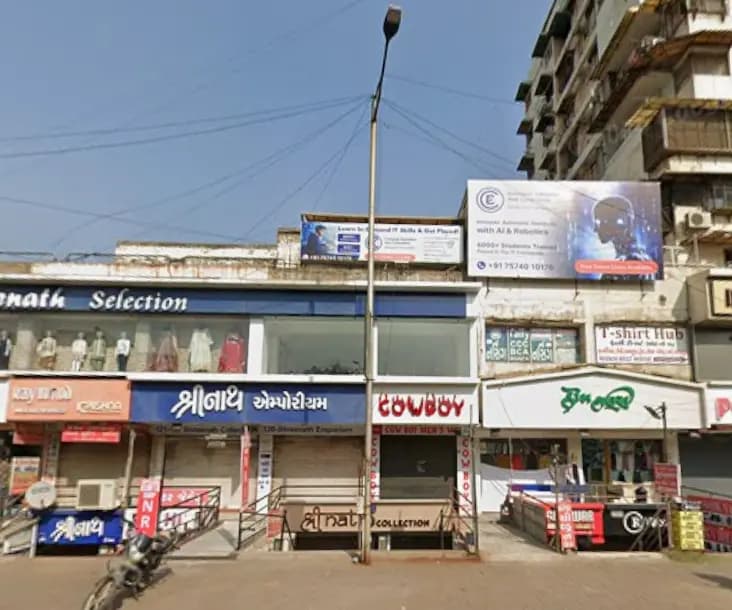
CEC Maninagar is ~2 minutes from Maninagar Railway Station, on the 2nd floor of Gopal Tower. BRTS, AMTS both serve this side of the city. Visiting is optional — counseling by phone comes first.
From the station side
2nd floor, Gopal Tower, Computer Education And Cybernetics, near Maninagar Railway Station Road, Maninagar, Ahmedabad, Gujarat 380008. Call +91 75740 10176 before you travel so we can confirm the day.
Learners also come from
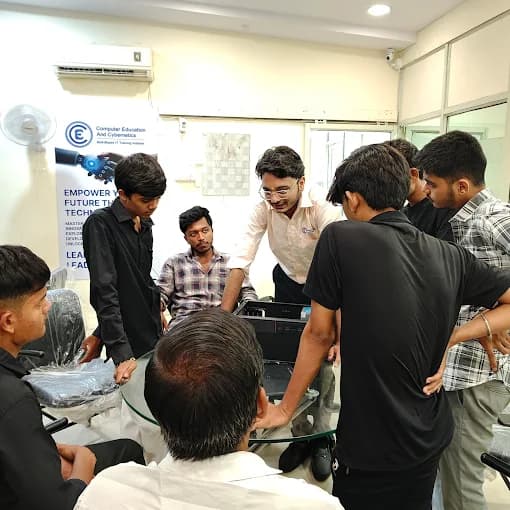
Counseling assigns the networking bench. The people below teach other subjects here. This slip is not added to those subject lists.
Shilpi Sharma
Software Faculty · 2+ years
CCC, Tally Prime, Prompt Engineering
Tanvi Darji
Software Faculty
MERN Stack Development, Data Science, Machine Learning, Artificial Intelligence
Nayan Nathani
Software Faculty · 2+ years
Data Analytics, Cyber Security
This bench is at Maninagar. Nikol and Vatva are available when counseling places you there. Visiting any centre is optional.
~2 minutes from Maninagar Railway Station
2nd floor, Gopal Tower, Computer Education And Cybernetics, near Maninagar Railway Station Road, Maninagar, Ahmedabad, Gujarat 380008+91 75740 10176Near / opposite New DMart, Nikol (Satyam Plaza)
S -25/26, D-mart, Satyam Plaza, Raspan Cross Rd, opp. Suketu Residency, near Nikol, Ankur Chokadi, New India Colony, Nikol, Ahmedabad, Gujarat 382350+91 91049 37871Near Vatva Lake Garden; opposite Kashiben Hospital
1st Floor, Computer Education And Cybernetics, Opposite Kashiben Hospital Beside Khodiayar Vav, Near Vatva Lake Garden, Vinzol Crossing Rd, Deriya Para, Vatva, Ahmedabad, Gujarat 382440+91 91571 90839If you can use the internet and have never written a network address, bring that to counseling.
Two lab PCs and a gateway share one small block, 192.168.10.0/29. The mask leaves six usable hosts. You write the network, the two PC addresses, the gateway, and the broadcast before you type anything. TCP/IP is the rule set that puts a source and a destination on each packet. At Computer Education And Cybernetics (CEC) you check this with a ping and one capture.
It marks where the network name ends and the host name begins. A /29 is a block of eight addresses, six of which you can give to machines. If you type an address from the next block, the other PC is no longer “on your side,” and the ping fails even when the cable is fine.
On the switch you use the ports the two PCs plug into, on the same local network. On the router you set the gateway address from the slip, 192.168.10.6. You then ping. Configuration here means typing the plan you already wrote, then proving the PCs can reach each other.
Source address, destination address, and what the packet was doing. For the working ping, the source is 192.168.10.1 and the destination is 192.168.10.2. If those numbers are not on your slip, you have the wrong packet.
You need to count a small block: how many addresses, which are hosts, which is the broadcast. Counseling starts there if that count is new. After 12th anyone can apply, from any stream. College students and career changers use the same slip.
Most office PCs now receive an address automatically, and many consoles hide the cable. The work that stays valuable is knowing when an address is in the wrong block, and reading the source and destination on one packet. A drafted split can mis-count the hosts, so you still count before you type.
You cable one bench, write the /29 slip, correct an address that fell outside the block, and mark one packet. About 80% of training time is practical. Counseling decides whether you start with the cable or with what an address is. The wider path is on our Ahmedabad networking page.
Yes. After 12th anyone can apply, from any stream. College students who want time on gear, and career changers moving into support work, use the same bench. School learners of any grade start with counseling before a course. You do not need a prior networking job.
CEC Maninagar is ~2 minutes from Maninagar Railway Station, on the 2nd floor of Gopal Tower. BRTS, AMTS both serve the area. Learners also come from Kankaria, Isanpur, Ghodasar, Khokhra, Meghaninagar, Danilimda. The centre is at 2nd floor, Gopal Tower, Computer Education And Cybernetics, near Maninagar Railway Station Road, Maninagar, Ahmedabad, Gujarat 380008. Call +91 75740 10176 before you visit.
Yes. Counseling is by call, WhatsApp, or email on +91 75740 10176 or info@cecyours.org. Visiting the lab is optional. If another Ahmedabad centre is easier, say so in counseling and we will place you where the same bench fits.
Tell us whether you are after 12th, in college, or changing careers. We will start you on the cable or on what an address is — and the bench stays on gear we own.