Back to Blogs

Ethical Hacking – Skills and Career Opportunities

December 13, 2025
6 min read
Ethical Hacking – Skills and Career Opportunities

We wrote this so you can see how the topic works in practice. You can read it from anywhere. If you want lab practice next, we will help you pick a course in counselling.

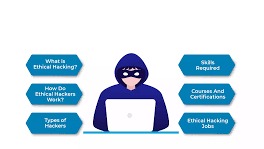
Ethical hacking involves identifying and fixing security vulnerabilities in systems before malicious hackers can exploit them. Ethical hackers play a vital role in cyber security by protecting organizations from digital threats. This field offers exciting career opportunities with high demand.

What is Ethical Hacking?

What is Ethical Hacking?

Ethical hackers legally test systems to find and fix security weaknesses.

Career Opportunities

Career Opportunities

Roles include penetration tester, security analyst, and cyber security consultant.

Who this is for

This is especially useful if you are a job seeker.

How we help you after you read

We help you see a career direction before you pick a course. You can start from where you are, including if you are new to IT. In lab we practise the role, not only names of tools. After a course, we stay with you until you get a job, based on your performance.

Share this article

What you can do next

If this topic is the skill you want to practise, we can map it to a course. You can book counselling or open a course. A branch visit is not required outside Ahmedabad.

Questions about this article

Short answers about who this is for, what to do next, and how to talk to us.

  • Who should read Ethical Hacking – Skills and Career Opportunities?

    This is especially useful if you are a job seeker. You can read it from anywhere. If you want lab practice next, we will help you pick a course.

  • Do I need to visit Ahmedabad to use this article?

    No. You can read from anywhere. Our centres are in Ahmedabad only — Maninagar, Nikol, and Vatva. A visit is optional and is not required outside Ahmedabad.

  • Is this article the same as joining a CEC course?

    No. We wrote this so you can understand the topic in plain language. A course is where you practise in lab, build work, and get feedback.

  • What should I do after I finish reading?

    If this is the skill you want to practise, book counselling or open a related course. For this topic, you can start with Cyber Security & Ethical Hacking with AI, Digital Marketing Professional with AI, Basic Computer Skills Crash Course, or browse all courses.

  • Can a parent use this to decide for a child?

    Yes. You can read it together and then book counselling. School children of any grade start with counselling first — we do not enrol a child into a full career track without that conversation.

  • Can I start this skill after 10th or 12th if I did not pass?

    After 10th or 12th, anyone can apply — pass, not pass, or a gap year, and any stream. Counselling is where we match the skill in this article to a course you can actually attend.

  • Will reading this get me a job?

    No. An article is for understanding. If you join a course, complete practical work, and sit interviews, we stay with you until you get a job, based on your performance.

  • How do I talk to CEC about this topic?

    Book counselling and mention this article, call +91 75740 10176, WhatsApp the same number, or email info@cecyours.org. You do not need to visit a branch to start.

More to Explore

Future of Technology and Career Opportunities
Dec 15, 2025

Future of Technology and Career Opportunities

Future of Technology and Career Opportunities

The rapid evolution of technology is continuously reshaping industries and creating new career opportunities. Staying updated with emerging trends is essential for students, professionals, and anyone aspiring to build a future-proof career in the tech world.

1. Emerging Technology Trends

Several technologies are driving innovation and transforming the job market:

  • Artificial Intelligence (AI) and Machine Learning (ML): Automating tasks, predictive analytics, and intelligent systems.

  • Cloud Computing: Remote data storage, scalable applications, and SaaS solutions.

  • Internet of Things (IoT): Connected devices in smart homes, healthcare, and industrial automation.

  • Blockchain Technology: Secure and decentralized digital transactions.

  • Cybersecurity: Protecting data and digital infrastructure from evolving threats.

  • Augmented Reality (AR) and Virtual Reality (VR): Immersive experiences for gaming, education, and training.

  • Mobile and Web Development: Constant demand for apps, websites, and digital solutions.

2. Career Opportunities in Technology

Technology careers are diverse and growing, offering high-paying and future-proof roles:

  • Software Developer / Engineer: Building web, mobile, and desktop applications.

  • Data Scientist / Analyst: Analyzing and interpreting complex data to support decision-making.

  • AI / ML Engineer: Designing intelligent systems and algorithms for automation and innovation.

  • Cybersecurity Specialist: Protecting networks, applications, and data from threats.

  • Cloud Engineer / DevOps: Managing cloud infrastructure and deploying scalable applications.

  • Full Stack / Frontend / Backend Developer: Designing, building, and maintaining modern web applications.

  • IoT Developer: Creating connected devices and smart solutions for industries and homes.

3. Why Technology Careers Are Promising

  • High Demand: Organizations across industries rely on technology solutions.

  • Global Opportunities: Technology skills are valued worldwide, enabling remote and international work.

  • Innovation-Driven Roles: Professionals can work on cutting-edge projects like AI, robotics, and blockchain.

  • Continuous Learning: Rapid innovation ensures constant skill growth and knowledge expansion.

4. Preparing for Technology Careers

To succeed in tech careers:

  • Develop strong programming and problem-solving skills

  • Learn emerging technologies and industry trends

  • Gain hands-on experience through projects, internships, or freelance work

  • Build a professional network and engage in continuous learning

Read Article
Complete Guide to Web Development for Beginners
Dec 15, 2025

Complete Guide to Web Development for Beginners

Web Development: A Complete Beginner’s Guide

In today’s digital-first world, websites and web applications have become essential for businesses, organizations, and individuals. From simple informational websites to complex web-based platforms, web development plays a crucial role in building a strong online presence. This guide by Computer Education And Cybernetics is designed to help beginners understand what web development is, how it works, the skills required, and the career opportunities it offers.

What is Web Development?

Web development is the process of creating websites and web applications that run on the internet. It involves planning, designing, building, testing, and maintaining web-based systems that users can access through a browser.

Web development covers multiple aspects, including:

  • Designing user interfaces

  • Writing business logic

  • Managing databases

  • Ensuring performance and security

  • Deploying and maintaining applications

In simple terms, web development turns ideas into functional digital experiences.

Why Web Development is Important Today

Almost every business today relies on the internet to reach customers, offer services, and build trust. Websites and web applications help businesses:

  • Establish an online identity

  • Reach global audiences

  • Automate processes

  • Improve customer engagement

  • Increase sales and visibility

Because of this growing reliance on digital platforms, web development has become one of the most in-demand skills globally.

Core Technologies for Beginners

HTML – Structure

HTML (HyperText Markup Language) is the foundation of web development. It defines the structure and content of web pages, such as headings, paragraphs, images, and links.

CSS – Styling

CSS (Cascading Style Sheets) is used to style and design web pages. It controls layout, colors, fonts, animations, and responsiveness.

JavaScript – Interactivity

JavaScript adds interactivity and dynamic behavior to websites. It allows pages to respond to user actions like clicks, form submissions, and real-time updates.

Together, HTML, CSS, and JavaScript form the core of frontend development.

Advanced Web Development Concepts

As beginners progress, they move beyond basic technologies and learn advanced concepts such as:

Frontend Frameworks & Libraries

  • React.js

  • Angular

  • Vue.js

These tools help build scalable, fast, and maintainable user interfaces.

Backend Technologies

  • Node.js

  • Python (Django, Flask, FastAPI)

  • Java

  • PHP

Backend frameworks simplify server-side development and API creation.

Databases

  • MySQL

  • PostgreSQL

  • MongoDB

Databases store and manage application data securely.

APIs and Integration

APIs allow different systems to communicate. They enable features like payment gateways, third-party services, and mobile app integration.

Deployment and Hosting

Deployment involves making applications live on the internet using platforms such as:

  • Cloud hosting

  • VPS

  • CI/CD pipelines

Tools Used in Web Development

Web developers rely on various tools to improve productivity and efficiency:

  • Code editors (VS Code)

  • Version control (Git, GitHub)

  • Browser developer tools

  • Package managers

  • Build and testing tools

Web Development Roadmap for Beginners

A structured learning path helps beginners progress effectively:

  1. Learn HTML, CSS, and JavaScript

  2. Understand responsive design

  3. Learn a frontend framework

  4. Study backend development

  5. Work with databases

  6. Build real-world projects

  7. Learn deployment and security

Consistency and hands-on practice are key to mastering web development.

Career Opportunities in Web Development

Web development offers diverse career paths, including:

  • Frontend Developer

  • Backend Developer

  • Full-Stack Developer

  • Web Designer

  • Software Engineer

With businesses continuously expanding online, skilled web developers are in high demand worldwide.

Why Choose Web Development as a Career?

Web development is attractive because it offers:

  • High demand and job security

  • Global career opportunities

  • Freelancing and remote work options

  • Continuous learning and growth

  • Competitive salaries

It is suitable for beginners, career switchers, and professionals alike.

Read Article
Why Cyber Security is Critical in the Digital Age
Dec 15, 2025

Why Cyber Security is Critical in the Digital Age

Why Cybersecurity is Critical in the Digital Age

In today’s digital era, almost every aspect of our personal, academic, and professional lives relies on technology. With the increasing use of the internet, cloud computing, and connected devices, cybersecurity has become a critical concern for individuals, businesses, and governments alike.

1. Protection of Sensitive Data

  • Personal Information: Names, addresses, financial details, and health records are at risk.

  • Business Data: Trade secrets, client data, and intellectual property need robust protection.

  • Cybersecurity ensures that sensitive data remains confidential and secure from unauthorized access.

2. Preventing Financial Loss

  • Cybercrime Costs: Data breaches, ransomware, and phishing attacks can lead to substantial financial losses.

  • E-Commerce Security: Online transactions require secure systems to prevent fraud.

  • Proper cybersecurity measures protect both individuals and businesses from monetary damage.

3. Safeguarding Reputation and Trust

  • Customer Confidence: Organizations that protect data maintain client trust.

  • Brand Image: Security breaches can harm brand reputation and long-term relationships.

  • Cybersecurity strengthens credibility in the eyes of stakeholders.

4. Protecting Against Cyber Threats

  • Malware and Viruses: Can corrupt files, steal information, or disrupt systems.

  • Phishing Attacks: Deceptive emails trick users into revealing sensitive information.

  • Hacking Attempts: Unauthorized access to networks and applications.

  • Cybersecurity strategies help detect, prevent, and mitigate these threats effectively.

5. Ensuring Regulatory Compliance

  • Data Protection Laws: Many countries have laws like GDPR, HIPAA, and CCPA.

  • Legal Responsibility: Businesses must comply with these regulations to avoid penalties.

  • Cybersecurity ensures compliance, safeguarding organizations from legal issues.

6. Enabling Safe Digital Transformation

  • Cloud Computing, IoT, and AI: These technologies increase connectivity but also risk.

  • Secure Systems: Cybersecurity ensures safe adoption of new technologies.

  • Business Continuity: Protects critical operations from cyber disruptions.

Read Article