Network Security Course in Maninagar, Ahmedabad

Network defense here means two lines you can test: a remote tunnel may reach one inside address, and everything else stays denied. In college, changing careers, or already working in IT, you practise that with us. At Computer Education And Cybernetics (CEC) Nayan Nathani checks both results before the note counts. The lab is about two minutes from the railway station.

Or reach us directly

+91 75740 10176 · info@cecyours.org

Two lines for this perimeter

  • Tunnel may reach10.8.0.10
  • Tunnel must miss10.8.0.20
  • Last lineDeny the rest
  • Before the tunnelBoth stay closed
You write
Two lines
You test
Both addresses
You leave with
The rule card
You start with
Counseling

How do two firewall lines make a perimeter?

You close the outside, you allow the tunnel to one address, and you deny the rest. We put that edge in front of you before the lines are typed.

Perimeter defense on this bench means the outside cannot reach 10.8.0.10 or 10.8.0.20 until a rule says so. Firewall configuration is one allow: the remote tunnel may reach 10.8.0.10. An access control list reads that allow first and a deny afterwards, so 10.8.0.20 still fails. A VPN is the encrypted path those lines govern. Computer Education And Cybernetics (CEC) teaches this on lab gear, with Nayan Nathani checking both tests.

  • The outside starts closed

    Before any tunnel exists, both inside addresses stay unreachable from the outside PC. That closed edge is the perimeter. You record the two failures before you allow anything.

  • One allow names one inside address

    The firewall line says the remote tunnel may reach 10.8.0.10. It does not say “the inside.” Secure remote access on this bench is that single destination.

  • The access list is read from the top

    An access control list is those lines in order. The first line that matches is the one that counts. If a wide allow sits above the deny, 10.8.0.20 is open and the deny never sees it.

  • The tunnel is not a key to the whole inside

    A VPN is an encrypted path between the lab laptop and this lab. After it is up, you test 10.8.0.10 and 10.8.0.20. Only the first may answer.

A task on paper first

Write four results before you bring the tunnel up: both addresses closed from the outside, 10.8.0.10 open through the tunnel, 10.8.0.20 still closed, and the deny sitting last. Across our centres we have conducted 20,000+ of training. This card is that page.
A worked example: the tunnel could reach the second address

A tunnel that is up is not a perimeter. The second address tells you whether the deny ran.

  1. The plan

    The card has two lines. Line one: the tunnel may reach 10.8.0.10. Line two: deny the rest. Before the tunnel, both 10.8.0.10 and 10.8.0.20 stay closed.

  2. What you look at

    The tunnel is up. Both inside addresses answer. A drafted list had put “allow the tunnel to every inside address” above the deny, so 10.8.0.20 matched the wide allow.

  3. The decision

    You replace the wide allow with the single destination 10.8.0.10 and you leave the deny underneath. You test again. 10.8.0.10 answers. 10.8.0.20 does not.

  4. What you write

    The two lines, the wide allow you removed, and the two results. The perimeter is the pair of tests, not the fact that a tunnel came up.

An honest limit: this bench is one tunnel and two inside addresses. Guest and staff separation, and alerts on lab traffic, stay on the Ahmedabad network security page. If an address itself is still new, start with the networking course at this centre.

Where is remote access heading?

Two changes are already in ordinary offices. You still write the two lines and you still run both tests. A drafted list can allow every inside address while the deny still sits underneath, so you trust the tests.

  • Remote work arrives as a tunnel first

    The door is less often a cable at the desk. The perimeter you can still explain is which inside address that tunnel may reach, and which it must miss.

  • Rule lists are often drafted for you

    A draft can place “allow every inside address” above the deny. 10.8.0.20 then answers, and the deny looks present while it never runs. You compare the draft with the two tests.

Remote access is shifting as the tunnel becomes the normal way in, and as rule lists arrive already drafted. The durable skill is knowing which inside address may answer and proving the other one does not. CEC trains that pair of tests on the lab edge.

How we teach you this perimeter

About 80% of our training is practical. Nayan Nathani reads the card the way a reviewer would: Did 10.8.0.10 answer through the tunnel, and did 10.8.0.20 stay closed?

  1. 1. Counseling before the first allow

    College students, career changers, and people already working in IT start here when they can explain an address. School learners of any grade start with counseling before a course. After 12th anyone can apply, from any stream.

  2. 2. Nayan Nathani reads both results

    He teaches cyber security here. He sends the card back when 10.8.0.20 answers, or when the deny is written above the allow so the allow never runs.

  3. 3. You reject a draft that opens the inside

    You may ask for a first draft of the two lines. If it allows the tunnel to every inside address, you cross that line out and you run the tests yourself. About 80% of training time is practical.

  4. 4. You leave with the pair of results

    The card shows 10.8.0.10 open through the tunnel and 10.8.0.20 closed. A tunnel that is merely “up” is not the note.

Computer Education And Cybernetics (CEC) teaches this edge as firewall lines, an access list in order, and a VPN you test twice. You start with counseling. We stay with you until you get a job, based on your performance. Wider policy and alert work stays on the Ahmedabad network security page.

When the two results are clear, a wider security path has a perimeter you can explain. That next step at this centre is the cyber security course at this centre.

Placement support and certificates

The rule card is the proof you can show. We help you put it in a portfolio, then we stay with you for the job search.

How we stay with you

  • We stay with you until you get a job, based on your performance in training, projects, and interviews
  • Our 5-step placement preparation covers your resume, the rule card, communication, and mock interviews
  • The two lines and the two test results are what you can show
  • Course completion certificates are issued after you finish the practical requirements

More detail on placement support at CEC.

What the closed outside, the one allow, and the deny each ask of you

These are three jobs on the same edge, not three courses. College students use the card when a diagram of a firewall was not enough. Career changers use the failed second address to show they can explain a tunnel. People already in IT work use the same pair of tests on lab gear.

  • The closed outside

    You test both inside addresses before the tunnel exists. Perimeter defense starts when both fail, and you write those failures down.

  • The one allow

    You name 10.8.0.10 as the only inside address the tunnel may reach. Firewall configuration on this bench is that line, then a test that answers.

  • The deny underneath

    You keep “deny the rest” as the last line, then you prove 10.8.0.20 still fails. An access list that never gets this test is unfinished.

How you reach the Maninagar lab

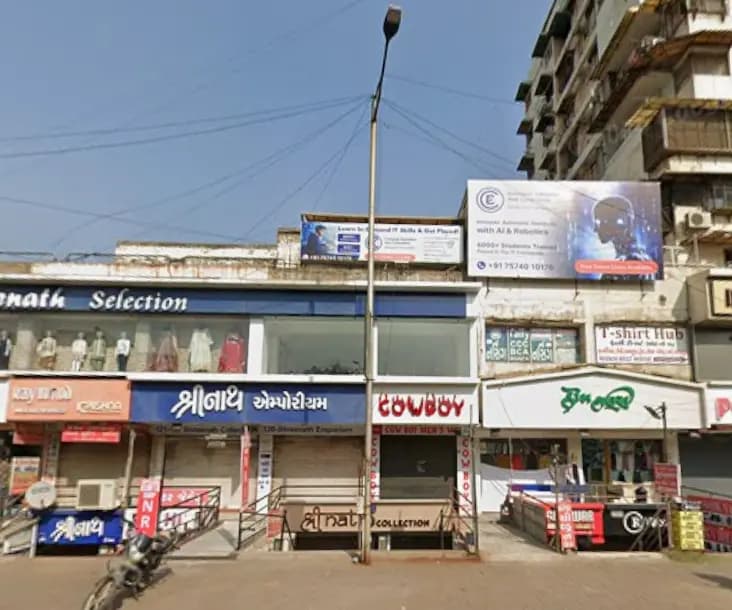
CEC Maninagar is ~2 minutes from Maninagar Railway Station, on the 2nd floor of Gopal Tower. BRTS, AMTS both serve this side of the city. Visiting is optional — counseling by phone comes first.

From the station side

2nd floor, Gopal Tower, Computer Education And Cybernetics, near Maninagar Railway Station Road, Maninagar, Ahmedabad, Gujarat 380008. Call +91 75740 10176 before you travel so we can confirm the day.

  • Mon – Sat: 8:45 AM – 7:15 PM
  • Sun: 10:00 AM – 6:00 PM
  • CEC Maninagar at Gopal Tower near Maninagar Railway Station
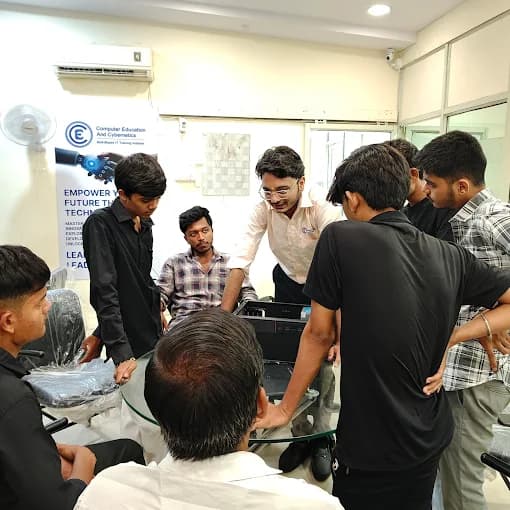
  • CEC Maninagar computer lab

Faculty at this centre

Nayan Nathani teaches cyber security here. Counseling confirms this perimeter is the right start.

  • Nayan Nathani

    Software Faculty · 2+ years

    Data Analytics, Cyber Security

Our three centres in Ahmedabad

This perimeter lab is at Maninagar. Nikol and Vatva are available when counseling places you there. Visiting any centre is optional.

Questions before the first deny

If you can name an address and have never written a deny, bring that to counseling.

  • How do two lines make a perimeter?

    Before the tunnel, both 10.8.0.10 and 10.8.0.20 stay closed from the outside. After the tunnel, the first line allows only 10.8.0.10 and the last line denies the rest, so 10.8.0.20 still fails. A firewall is that decision. An access control list is the same lines read from the top. At Computer Education And Cybernetics (CEC), Nayan Nathani checks both results with you.

  • What is a firewall line in plain words?

    It names who may go where, and whether that path is allowed. On this bench the “who” is the remote tunnel and the “where” is one inside address, 10.8.0.10. A line that says every inside address is a different rule, and you do not keep it.

  • What does the VPN change?

    A VPN is an encrypted path between the lab laptop and this lab. Bringing it up does not open the inside. You still test 10.8.0.10, which may answer, and 10.8.0.20, which must not. The tunnel is the path. The two lines are the permission.

  • Why does the order of an access list matter?

    The first matching line wins. If “allow the tunnel to every inside address” is first, 10.8.0.20 matches it and the deny underneath never runs. You put the single allow for 10.8.0.10 first and the deny last, then you test both.

  • Do I need a networking job before I start?

    You need to be able to name an address and say what a failed test looks like. College students, career changers, and people already working in IT use the same card. Counseling starts with addressing if that part is new. After 12th anyone can apply, from any stream.

  • Where is remote access heading?

    More work arrives through a tunnel, and rule lists are often drafted before a person reads them. A draft can allow every inside address while the deny still sits on the page. The check that stays is your two lines and the two tests: 10.8.0.10 answers, 10.8.0.20 does not.

  • How does CEC help me practise this perimeter?

    Nayan Nathani teaches cyber security here. You write the two lines, reject a draft that opens every inside address, and test 10.8.0.10 and 10.8.0.20. About 80% of training time is practical. Guest, staff, and alert work stays on our Ahmedabad network security page.

  • Can I start from college, a career change, or a current IT job?

    Yes. College students, career changers, and working professionals use the same two lines. If addressing is still new, counseling can start you on the networking bench first. School learners of any grade start with counseling before a course.

  • How do I reach the Maninagar lab?

    CEC Maninagar is ~2 minutes from Maninagar Railway Station, on the 2nd floor of Gopal Tower. BRTS, AMTS both serve the area. Learners also come from Kankaria, Isanpur, Ghodasar, Khokhra, Meghaninagar, Danilimda. The centre is at 2nd floor, Gopal Tower, Computer Education And Cybernetics, near Maninagar Railway Station Road, Maninagar, Ahmedabad, Gujarat 380008. Call +91 75740 10176 before you visit.

  • Can I start without visiting Maninagar?

    Yes. Counseling is by call, WhatsApp, or email on +91 75740 10176 or info@cecyours.org. Visiting the lab is optional. If another Ahmedabad centre is easier, say so in counseling and we will place you where the same two lines fit.

Write the two lines, then test both addresses

Tell us whether you are in college, changing careers, or already working in IT. We will start you on the two lines or on what an address is — and the tests stay on gear we own.

Or reach us directly

+91 75740 10176 · info@cecyours.org