Ethical Hacking Course in Vatva, Ahmedabad

Ethical hacking here means a sheet you can hand to someone else: what should exist on a small network, what a scan actually named, and whether one forbidden path was blocked. You will practise that with us on a lab range we own. At Computer Education And Cybernetics (CEC) a mentor reads the sheet before it counts. The lab is near Vatva Lake Garden, opposite Kashiben Hospital.

Or reach us directly

+91 91571 90839 · info@cecyours.org

The audit sheet, three columns

  • AssetsMachines that should existNames the scan returned
  • AccountsWho may sign inNames written on the sheet
  • PerimeterGuest side stays off billingPass or fail, then recheck
You practise on
A lab range we own
A scan is
What answered, not entry
You leave with
One audit sheet
You start with
Counseling

How does a system audit use a scan and a perimeter check?

You write the rule first, then you see what answers, then you test one path the rule forbids. We hand you a two-side lab range and that sentence before any scan runs.

A system audit in ethical hacking is a written sheet of expected machines, expected accounts, and one rule about which side of a network may talk to which. Network scanning fills the column of what answered on a range you are allowed to check. Defensive perimeter testing records whether one forbidden path answers, then whether it still answers after the block. Computer Education And Cybernetics (CEC) teaches this on a lab range and does not assign scans of networks you do not own.

  • The sheet is the audit

    A system audit is a page someone else can read: which machines should exist, which accounts may sign in, and which side of the network may talk to which. Ethical hacking in this lab starts when that page exists before any tool runs.

  • A scan fills one column

    Network scanning, here, means listing what answers on a range you were given. You copy those names into the scan column. An answer is not permission to sign in, change a file, or keep exploring.

  • One forbidden path is the perimeter test

    Defensive perimeter testing checks a written rule. On our lab, the guest side must not reach the billing machine. You start on the guest side and record whether that machine answers. A fail means the edge should block the path. You recheck. You do not log in.

  • Shop and plant patterns, on a lab we own

    The range stands in for a small works office: a billing PC on one side, workshop machines on the other. We do not send you to a factory floor or a live shop network. The skill is the sheet, practised where we control both sides.

A task on paper first

Draw two sides: guest and billing. Write one sentence: the guest side must not reach the billing machine. That sentence is the rule you will test. Across our centres, 8,000+ learners have trained with us; this hour is spent finishing that sentence, not collecting tool names.

A worked example: the billing PC answered from the guest side

The check is allowed because both sides are ours. The skill is recording the fail and proving the path closed.

  1. The written rule

    The lab copies a small works office. Guest-side machines must not reach the billing PC. That one sentence is the rule. Everything else on the sheet is evidence for or against it.

  2. The scan column

    A scan of the range you are allowed to check names the machines that answer. You copy those names next to the asset list. A printer the list called by another name is a naming miss, not a finding, until you match it.

  3. The one path

    From the guest side, the billing PC answers. The rule said it must not. You stop. You do not sign in, try a password, or open files on that PC.

  4. The line you keep

    You write the machine, the side you were on, that the rule failed, and the change: the lab edge should block that path. After the change, you look again and record that the billing PC no longer answers from the guest side.

An honest limit: this lab makes you accurate on one small range and one rule. Auditing a live factory, a real shop network, or a full-time audit workload comes later, and only with permission. Host hardening is a different bench — see the Nikol ethical hacking lab. A web-app finding is another — see Maninagar.

Where are audits of shop and plant networks heading?

Two changes are already visible. You still prove the rule yourself, including when an assistant wrote the first draft of the audit line. We ask you to point at the scan and the recheck, not at the severity label.

  • Scan reports arrive with a severity on every name

    An assistant now marks each answering machine as urgent, including the billing PC answering on the office side where the rule allows it. The label grew. Your pass-or-fail against the written rule did not.

  • Billing PCs and workshop machines share one small network

    Shops and small plants already put accounts machines and floor machines on the same network. The check that stays useful is still which side may talk to which. A longer scan does not answer that.

Where an assistant still fails you

  • It marks the billing PC as a breach when it answers on the side the rule allows
  • It names a machine that was not in the scan you saved
  • It tells you to sign in on the billing PC to “show impact”

Audits of small shop and plant networks are shifting as scan reports add a severity to every answering machine, while billing PCs and workshop machines already share one network. The durable skill is a written rule about which side may talk to which, proved by a recheck. CEC trains that proof in the lab. A generated label does not replace it.

How we teach you to finish one audit sheet

About 80% of our training is practical. A mentor reads the sheet the way a reviewer would: Did you stay on the lab range, and does the forbidden path still answer?

  1. 1. Counseling finds the gap first

    School learners of any grade start with counseling. After 12th anyone can apply, from any stream. College students, and career changers coming from a billing desk or a plant office, start here too. If “which side may talk” is new, we begin with that sentence before a scan.

  2. 2. One range until the sheet can be reread

    You stay on a lab range we control. A mentor sends the sheet back when you left that range, when a scan name is not matched to the asset list, or when you went past “it answered.”

  3. 3. Three columns, then one recheck

    You fill assets, accounts, and the perimeter result. The lab is finished when the forbidden path is recorded and, after the change, no longer answers. A scan printout alone is not the sheet.

  4. 4. An assistant may draft the line

    You can ask it to phrase the audit line. You then delete any sentence you cannot point to in the scan, the path you tried, or the recheck.

Computer Education And Cybernetics (CEC) teaches this audit inside the Cyber Security and Ethical Hacking with AI course. You start with counseling, fill one sheet on a lab range, test one perimeter rule, and leave with a line a mentor can recheck. We stay with you until you get a job, based on your performance.

This lab is part of our Cyber Security & Ethical Hacking with AI course, not a separate product. The Ahmedabad ethical hacking page describes the wider path. The wider security course at this centre is the cyber security course here.

Placement support and certificates

The audit sheet is the proof you can show. We help you put it in a portfolio, then we stay with you for the job search.

How we stay with you

  • We stay with you until you get a job, based on your performance in training, projects, and interviews
  • Our 5-step placement preparation covers your resume, the audit sheet, communication, and mock interviews
  • The sheet — expected assets, what answered, and whether the forbidden path stayed closed — is what you can show
  • Course completion certificates are issued after you finish the practical requirements

More detail on placement support at CEC.

What a scan, an audit, and a perimeter test each ask of you

These are three jobs on the same sheet, not three courses. After 12th anyone can start, from any stream. College students use the sheet as lab work beyond the syllabus. Career changers from a shop desk or a plant office use it to show a rule they checked. School learners of any grade begin with counseling.

  • Network scanning

    You list what answers on the lab range and copy those names onto the sheet. You do not treat a name as a machine you may enter.

  • System auditing

    You write the assets and accounts that should exist, then mark what the scan showed that the list did not expect. The page is the audit.

  • Perimeter testing

    You test one written rule: the guest side must not reach billing. Pass or fail, then the change, then a recheck. You stop at the answer.

How you reach the Vatva lab

CEC Vatva is Near Vatva Lake Garden; opposite Kashiben Hospital. Accessible from industrial belt routes. Visiting is optional — counseling by phone comes first.

Lake Garden side

1st Floor, Computer Education And Cybernetics, Opposite Kashiben Hospital Beside Khodiayar Vav, Near Vatva Lake Garden, Vinzol Crossing Rd, Deriya Para, Vatva, Ahmedabad, Gujarat 382440. Call +91 91571 90839 before you travel so we can confirm the day.

  • Mon – Sat: 8:00 AM – 8:15 PM
  • Sun: 10:00 AM – 6:00 PM
  • CEC Vatva opposite Kashiben Hospital near Vatva Lake Garden
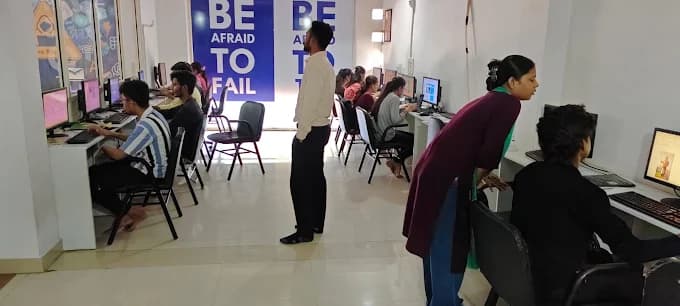
  • CEC Vatva computer lab

Faculty at this centre

The audit sheet is reviewed by a cyber security mentor arranged in counseling. The people below teach the other classes at this centre. We do not assign this lab to those subject lists.

  • Pranav Suthar

    Senior Software Faculty · 4+ years

    Digital Marketing, Graphic Design, Full Stack Development

  • Priya Shrivas

    Senior Software Faculty · 3+ years

    CCC, Tally Prime, Prompt Engineering

  • Suhani Kushwaha

    Software Faculty · 2+ years

    Data Analytics, Data Science, AI/ML

Our three centres in Ahmedabad

This lab is at Vatva. Maninagar and Nikol are available when counseling places you there. Visiting any centre is optional.

Questions before an audit lab

If you are unsure whether to start with the sheet or with what a network side means, bring that to counseling.

  • How does a system audit work with a network scan?

    You start with a written sheet: machines that should exist, accounts that may sign in, and one rule about which side of the network may talk to which. A scan then lists what answers on a lab range you were given, and you copy those names into the sheet. Ethical hacking here means comparing the two and recording the difference. At Computer Education And Cybernetics (CEC) that work stays on a range we control.

  • What is defensive perimeter testing in this lab?

    It is one check against a written rule. On our lab, machines on the guest side must not reach the billing PC. You start on the guest side and record whether that PC answers. If it does, the rule failed, the lab edge should block the path, and you recheck. You do not sign in or open files.

  • Will I be scanning real factories or shop networks?

    No. The range stands in for a small works office, and both sides belong to CEC. Scanning a factory, a shop, or any network you were not given is not part of the course. Permission is the first rule, including when an assistant suggests a target.

  • What do the first labs cover?

    Writing an asset and account list, copying one allowed scan into that sheet, and testing one perimeter rule from the guest side to the billing PC. You leave with the sheet and a recheck a mentor can repeat.

  • Do I need networking before I start?

    You need enough to say what a machine and a side of a network are. If that is new, counseling starts you there, then this sheet. College students and career changers who already work around billing PCs or plant offices can start with the written rule.

  • Where is this kind of auditing heading?

    Scan reports already arrive with a severity on every answering machine, and small shops and plants already put billing PCs and workshop machines on one network. The work that stays valuable is a written rule about which side may talk to which, proved with a recheck. A generated severity label does not replace that rule.

  • How does CEC help me practise this?

    You fill one audit sheet on a lab range, test one perimeter rule, and rewrite the line until a mentor can recheck it. About 80% of training time is practical. Counseling decides whether you start with the sheet or with what a network side means. The practice sits inside our Cyber Security and Ethical Hacking with AI course.

  • Can I start after 12th, from college, or from a shop or plant job?

    Yes. After 12th anyone can apply, from any stream. College students who want lab time beyond the syllabus, and career changers from a billing desk or a plant office, use the same counseling. School learners of any grade start with counseling before a course. You do not need a prior hacking background.

  • How do I reach the Vatva lab?

    CEC Vatva is Near Vatva Lake Garden; opposite Kashiben Hospital. Accessible from industrial belt routes. Learners also come from Vatva, Ramol, Lambha, Isanpur, Narol. The centre is at 1st Floor, Computer Education And Cybernetics, Opposite Kashiben Hospital Beside Khodiayar Vav, Near Vatva Lake Garden, Vinzol Crossing Rd, Deriya Para, Vatva, Ahmedabad, Gujarat 382440. Call +91 91571 90839 before you visit.

  • Can I start without visiting Vatva?

    Yes. Counseling is by call, WhatsApp, or email on +91 91571 90839 or info@cecyours.org. Visiting the lab is optional. If another Ahmedabad centre is easier, say so in counseling and we will place you where the same practice fits.

Finish one audit sheet, then show the rule

Tell us whether you already work around billing PCs or plant machines. We will start you on the sheet or on foundations — and the lab stays on a range we own.

Or reach us directly

+91 91571 90839 · info@cecyours.org