Computer Vision Course in Vatva, Ahmedabad
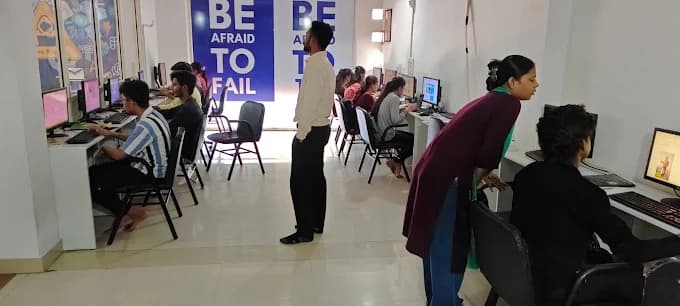
Computer vision here starts with a preprocess contract: resize, normalise, augment in training, then score flipped and darker hold-outs so the model learns the object — not one camera look. At Computer Education And Cybernetics (CEC), Suhani Kushwaha reviews that recipe before the project counts. The lab is near vatva lake garden; opposite kashiben hospital.
Or reach us directly
+91 91571 90839 · info@cecyours.org
Preprocess → augment → hard hold-out
- ResizeEvery training and test image lands at the same height and width before the network runs.
- NormaliseScale pixel values to a shared range so bright and dark cameras do not fight each other.
- AugmentCreate flipped, slightly rotated or darker copies in training so the model learns the object, not one pose.
- Hold outKeep a flipped or darker test set the model never trained on — that is where honesty shows.
- You prepare
- Same size
- You vary
- Augment
- You leave with
- Condition scores
- You start with
- Counseling
What do you practise in computer vision?
Four building blocks. The preprocess and augment recipe decides whether classification or detection survives the next camera.
Computer vision teaches machines to interpret images through preprocessing, augmentation, classification, detection and neural networks. Consistent resize and normalisation, plus training-time variety, help models generalise; a harder hold-out set proves whether that worked. Computer Education And Cybernetics (CEC) reviews the preprocess recipe before learners trust overall accuracy alone.
Image preprocessing
Resize and normalise so every frame the network sees is comparable. Skipping this step is the first reason a demo works on your phone photos and fails on someone else’s.
Augmentation
Controlled variety in training — flips, small rotations, brightness shifts — so the model recognises the object under changed conditions, not one exact photo.
Classification and detection
One label for a crop, or boxes for each object. Both still need the same preprocessing contract; detection also needs careful box labels after resize.
Neural networks for vision
Convolutional networks learn edges then shapes from pixel grids. You still own the preprocess and augment recipe — the network does not invent consistent input.
Practice task
Before training, write your resize size, normalisation rule and which augmentations run only on the train set. List how many flipped or darker images sit in the hard hold-out. What we do with you here: Suhani checks that note before you run the first epoch.
Classification still needs a clear label; detection still needs boxes. For the task-choice angle see computer vision in Maninagar. For IoU scoring see computer vision in Nikol.
A worked example: strong upright scores, weak flips
Input → what you look at → decision → what you write down. This is the preprocess habit we practise with you.
The project
Classify product photos as “label readable” or “label damaged.” You have 600 upright, well-lit training crops. You set aside 80 upright validation images and 80 harder test images: 40 flipped sideways and 40 darker.
First run
You resize to 224 × 224 but skip normalisation and augmentation. Upright validation accuracy hits 91%. On the harder test set it drops to 58% — almost all flips fail.
What you look at
Wrong predictions are sideways packages the model never saw in training. Pixel value ranges also differ between phone cameras. The network memorised upright bright crops.
The decision
Add brightness normalisation, horizontal flips and small rotations in training only. Keep the harder flipped and darker images out of training. Re-score upright validation and the hard test set separately.
After the fix
Upright validation stays near 89%. Hard test rises to 84%. Remaining misses are extreme blur and torn labels covering the barcode — written as failure types.
What you write down
Resize size, normalisation rule, which augmentations you used, upright vs hard-test scores before and after, and three failure photos. That condition table is the project.
For the wider pixel-to-evaluation path across Ahmedabad, see the computer vision course in Ahmedabad. For evaluation tables at this centre, see deep learning in Vatva.
Where is computer vision practice heading?
Recipes get suggested automatically. Your hard hold-out still decides honesty. What we do with you here: every project keeps upright and harder scores side by side.
Auto-augment recipes still need your hold-out set
Tools can suggest flip and colour policies. You still keep a harder test split the recipe never saw — otherwise you only prove the model likes the same look as training.
More cameras, same preprocess contract
Phones and industrial cameras mix in one project. A shared resize and normalise step stays valuable when the next device arrives.
Where vision helpers still fail
- It boosts training variety while your “test” images are still the same upright bright crops
- It skips normalisation so one camera’s dark photos look like a different class
- It suggests heavy rotation that warps text labels your task must still read
Computer vision practice is shifting toward auto-augment tools and mixed camera sources, while models that only work on upright bright training photos remain a common failure. The stable skills are a shared preprocess contract, training-time augmentation and harder hold-out scores. Computer Education And Cybernetics (CEC) trains learners to keep those habits in every vision project.
How we teach computer vision
About 80% practical — with mentor review of your preprocess recipe and condition scores, not only overall accuracy.
1. Counseling places your base
Python comfort and whether machine learning should come before vision. School learners of any grade start with counseling first.
2. Suhani Kushwaha reviews your recipe
She teaches data analytics, data science and AI/ML. She sends the project back if “test” images are still the same upright bright look as training.
3. You preprocess, augment and score conditions
About 80% of training time is practical. You keep upright and hard-test scores side by side after each change.
4. You leave with a condition packet
Resize rule, augment list, before/after scores and failure photos — evidence for mentoring and interviews.
At Computer Education And Cybernetics (CEC), computer vision starts with counseling, then a written preprocess and augment recipe, training runs and condition scores reviewed by mentors such as Suhani Kushwaha. Learners leave with a project packet they can explain in interviews. We stay with you until you get a job, based on your performance in training, projects and interviews.
Data Science & AI Expert with Python
Catalogue home for computer vision projects inside the wider data and AI path.
View courseArtificial Intelligence & Machine Learning
When counseling places classic ML beside or before vision projects.
View courseWho is this computer vision path for?
College learners, career changers and working professionals ready for project-level practice.
College students
Turn pixel theory into a vision project where you can defend preprocessing and condition scores, not only overall accuracy.
Career changers
Counseling checks Python and machine learning first when needed, then builds toward vision projects with an honest augment recipe.
Working professionals
If photos come from mixed phones or plant cameras, learn why consistent preprocessing and held-out hard cases matter.
Placement support and certificates
A condition score table with failure photos shows employers you prepare vision data carefully.
How we stay with you
- We stay with you until you get a job, based on your performance in training, projects and interviews
- Our 5-step placement preparation covers your resume, portfolio, communication and mock interviews
- Course completion certificates are issued after you finish the practical requirements
Visiting CEC Vatva for computer vision counseling
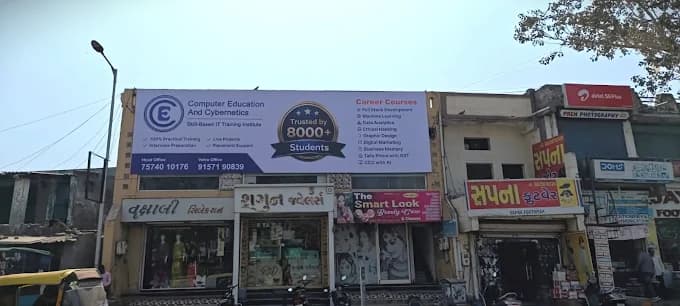
Near Vatva Lake Garden; opposite Kashiben Hospital. Accessible from industrial belt routes. Learners also come from Vatva, Ramol, Lambha, Isanpur, Narol. Hours: Mon – Sat: 8:00 AM – 8:15 PMSun: 10:00 AM – 6:00 PM.
Suhani Kushwaha
Software Faculty · 2+ years
Data Analytics · Data Science · AI/ML
Full address and map: CEC Vatva location details. For machine learning foundations citywide, see the machine learning course in Ahmedabad. For the wider AI map, see the artificial intelligence course in Ahmedabad.
Our three centres in Ahmedabad
For classroom admission we warmly welcome you and your parents to visit — Vatva is featured first below because this page is for learners choosing that centre. Please choose whichever centre is easier for you. Outside Ahmedabad? We offer online admission with a counseling call.
CEC VatvaThis page
Near Vatva Lake Garden; opposite Kashiben Hospital
1st Floor, Computer Education And Cybernetics, Opposite Kashiben Hospital Beside Khodiayar Vav, Near Vatva Lake Garden, Vinzol Crossing Rd, Deriya Para, Vatva, Ahmedabad, Gujarat 382440+91 91571 90839CEC Maninagar
~2 minutes from Maninagar Railway Station
2nd floor, Gopal Tower, Computer Education And Cybernetics, near Maninagar Railway Station Road, Maninagar, Ahmedabad, Gujarat 380008+91 75740 10176CEC Nikol
Near / opposite New DMart, Nikol (Satyam Plaza)
S -25/26, D-mart, Satyam Plaza, Raspan Cross Rd, opp. Suketu Residency, near Nikol, Ankur Chokadi, New India Colony, Nikol, Ahmedabad, Gujarat 382350+91 91049 37871
Related guides
- Computer vision course in AhmedabadCitywide path — pixels through evaluation
- Computer vision in ManinagarClassify vs detect before you label
- Computer vision in NikolIoU box scoring for detection
- Deep learning course in VatvaEvaluation tables at this centre
- Neural networks course in AhmedabadHow one training step works
- Book a counseling sessionCheck preprocess fit and starting point
Questions about computer vision
What is computer vision?
The part of AI that interprets images and video. Practice covers image preprocessing, augmentation, classification, detection, neural networks and evaluation on images the model has not seen — including harder conditions you hold out on purpose.
Why does image preprocessing matter?
Resize and normalisation make every input comparable. Without them, models latch onto camera quirks — brightness, resolution, orientation — instead of the object you care about.
What is data augmentation in computer vision?
Creating varied training copies (flips, small rotations, brightness shifts) so the network learns the object under change. Augmentation belongs in training; your held-out hard test set stays clean so scores stay honest.
Do I need deep learning before computer vision?
You need comfort with Python and labelled examples. Counseling may place machine learning or deep learning practice first when that base is missing. After 10th or 12th anyone can apply; school learners of any grade start with counseling before a course.
Where is computer vision practice heading?
Auto-augment tools and mixed camera sources are common, but a shared preprocess contract and a harder hold-out set still decide whether a project is trustworthy. That habit does not expire when the tool changes.
How does CEC help you practise computer vision?
Suhani Kushwaha teaches data analytics, data science and AI/ML here. You write the resize and augment recipe, train, score upright vs hard conditions and finish a project note — about 80% practical. We stay with you until you get a job, based on your performance in training, projects and interviews.
Who is this path for?
College students, career changers and working professionals who want project-level computer vision practice. If classic machine learning is still new, counseling may start you there first.
How is this different from Maninagar or Nikol computer vision?
Maninagar focuses on choosing classification versus detection. Nikol goes deep on IoU box scoring. This Vatva page centres on preprocessing and augmentation so models survive flips, darker crops and mixed cameras.
How do I reach the Vatva lab?
CEC Vatva is Near Vatva Lake Garden; opposite Kashiben Hospital. Accessible from industrial belt routes. Learners also come from Vatva, Ramol, Lambha, Isanpur, Narol. Call +91 91571 90839 before you visit.
Do I need to visit before classroom admission?
For classroom admission we warmly welcome you and your parents to visit — meet mentors and staff, see the lab and ask questions face to face. Call or WhatsApp +91 91571 90839 to book a time. Please choose whichever centre is easier for you if Maninagar or Nikol suits your commute better. Learning from outside Ahmedabad? We guide you on a counseling call and complete admission online.
Bring one photo set — we will write the preprocess recipe first
In counseling at CEC Vatva we check your Python, sketch resize and augment rules, and tell you honestly whether machine learning or deep learning comes before the vision project.