Deep Learning Course in Vatva, Ahmedabad
Deep learning here means networks, training data, optimization and evaluation you can defend — especially when overall accuracy hides a weak class. At Computer Education And Cybernetics (CEC), Suhani Kushwaha reviews your confusion matrix before the project counts. The lab is near vatva lake garden; opposite kashiben hospital.
Or reach us directly
+91 91571 90839 · info@cecyours.org
When 94% is still unfinished
- Overall accuracy94% — looks strong until you open the matrix.
- Majority class“Normal” rows are mostly correct.
- Minority class“Alert” recall is only 40% — most alerts are missed.
- Project decisionRebalance training labels, retune the decision threshold, re-score.
- You read
- Confusion matrix
- You catch
- Weak class
- You leave with
- Eval sheet
- You start with
- Counseling
What do you practise in deep learning?
Four pillars — with class-wise evaluation as the proof this page emphasises.
Deep learning is training neural networks on labelled data, optimizing how learning happens, and evaluating results with metrics that reveal every class — not only overall accuracy. Practice includes training-data design for uneven labels, optimization, confusion-matrix reading and a finished project eval sheet. Computer Education And Cybernetics (CEC) teaches this path with mentor review of those sheets.
Neural networks
Layered models that learn from examples. Deep learning stacks those layers — but a high overall score is not enough until you see which classes succeed and which fail.
Training data
Labelled examples, including rare but important cases. If alerts are 5% of the rows, a lazy model can look accurate by predicting “normal” almost always.
Optimization
How the network updates during training. After that, you may still adjust the decision threshold so the minority class is not ignored.
Model evaluation
Confusion matrices, precision and recall per class, plus a short failure gallery. That evaluation sheet is the heart of the project here.
Practice task
After one training run, draw the confusion matrix by hand from the validation counts. Circle the weaker class before you change any code. What we do with you here: Suhani reviews that drawing before you rebalance or move a threshold.
A worked example: 94% accuracy, weak alert recall
Input → what you look at → decision → what you write down. This is the evaluation habit we practise with you.
The project
Classify practice sensor rows as “normal” or “alert”. In the training file, alerts are only about one in twenty rows — a common imbalance.
First network
After training, overall accuracy on validation is 94%. A demo screenshot would look finished.
What you look at
The confusion matrix: almost all “normal” rows are correct, but only 4 of 10 true alerts are found. Recall on alerts is 40%.
The decision
You add careful rebalancing of the training alerts, keep the same validation fold, and lower the decision threshold slightly so more alerts are caught — then you re-score.
After the fix
Overall accuracy dips to 91%, but alert recall rises to 80%. You and Suhani Kushwaha agree the second model is the honest choice for this job.
What you write down
Class counts, both matrices, threshold used, and five missed-alert rows you inspected. That eval sheet is the project — not the 94% headline.
For hand-worked network maths, see the neural networks course in Ahmedabad. Sibling practice angles live on the Maninagar and Nikol deep learning pages.
Where is deep learning evaluation heading?
One-number dashboards stay common. Class-wise reading stays essential. What we do with you here: every project keeps both matrices.
Dashboards show one accuracy number
Product screens often highlight a single score. You still open per-class metrics before you trust a model near uneven real-world labels.
Imbalance tools are easier to run
Libraries make resampling and class weights quick to try. Judging whether the minority class improved — with a matrix you can explain — stays the durable skill.
Where evaluation still fails
- Overall accuracy looks fine while the rare class is almost never found
- The test set is rebalanced “to help the score” so it no longer matches reality
- A threshold is moved without rewriting the confusion matrix for the mentor
Deep learning evaluation is shifting toward single-score dashboards and easier imbalance tooling, while ignoring rare classes remains a common failure. The stable skill is reading confusion matrices and failure galleries before shipping a model. Computer Education And Cybernetics (CEC) trains learners to keep that habit in every project.
How we teach deep learning
About 80% practical — with mentor review of your matrix, not only your accuracy headline.
1. Counseling checks your base
Python comfort and whether machine learning should come before deep stacks. School learners of any grade start with counseling first.
2. Suhani Kushwaha reads the matrix
She teaches data analytics, data science and AI/ML. She sends the project back if you only quote overall accuracy.
3. You fix imbalance on purpose
About 80% of training time is practical. You change data balance or threshold, then redraw the matrix.
4. You leave with an eval sheet
Class counts, both matrices, threshold and failure rows — portfolio proof for interviews and viva.
At Computer Education And Cybernetics (CEC), deep learning starts with counseling, then training runs and class-wise evaluation sheets reviewed by mentors such as Suhani Kushwaha. Learners leave able to explain which class was weak and how they fixed it. We stay with you until you get a job, based on your performance in training, projects and interviews.
Data Science & AI Expert with Python
Catalogue home for deep learning inside the wider data and AI path.
View courseArtificial Intelligence & Machine Learning
When counseling places classic ML before deep stacks.
View courseWho is this deep learning path for?
College learners who need defendable evaluation, plus career changers and working professionals who face uneven real-world labels.
College students
Learn to defend a model with a confusion matrix and failure gallery — stronger viva and interview material than a single accuracy number.
Career changers
Build evaluation habits that transfer into data and AI roles, with counseling placing Python or machine learning first when needed.
Working professionals
Practise reading class-wise errors before anyone trusts an AI flag near uneven operational data — a common need around industrial-area workflows.
Placement support and certificates
An eval sheet with two matrices shows employers you catch weak classes — not only high headlines.
How we stay with you
- We stay with you until you get a job, based on your performance in training, projects and interviews
- Our 5-step placement preparation covers your resume, portfolio, communication and mock interviews
- Course completion certificates are issued after you finish the practical requirements
Visiting CEC Vatva for deep learning counseling
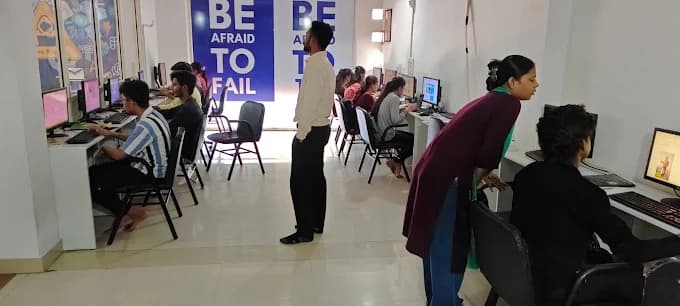
Near Vatva Lake Garden; opposite Kashiben Hospital. Accessible from industrial belt routes. Learners also come from Vatva, Ramol, Lambha, Isanpur, Narol. Hours: Mon – Sat: 8:00 AM – 8:15 PMSun: 10:00 AM – 6:00 PM.

Suhani Kushwaha
Software Faculty · 2+ years
Data Analytics · Data Science · AI/ML
Full address and map: CEC Vatva location details. Wider AI map: artificial intelligence course in Ahmedabad.
Our three centres in Ahmedabad
For classroom admission we warmly welcome you and your parents to visit — Vatva is featured first below because this page is for learners choosing that centre. Please choose whichever centre is easier for you. Outside Ahmedabad? We offer online admission with a counseling call.
CEC VatvaThis page
Near Vatva Lake Garden; opposite Kashiben Hospital
1st Floor, Computer Education And Cybernetics, Opposite Kashiben Hospital Beside Khodiayar Vav, Near Vatva Lake Garden, Vinzol Crossing Rd, Deriya Para, Vatva, Ahmedabad, Gujarat 382440+91 91571 90839CEC Maninagar
~2 minutes from Maninagar Railway Station
2nd floor, Gopal Tower, Computer Education And Cybernetics, near Maninagar Railway Station Road, Maninagar, Ahmedabad, Gujarat 380008+91 75740 10176CEC Nikol
Near / opposite New DMart, Nikol (Satyam Plaza)
S -25/26, D-mart, Satyam Plaza, Raspan Cross Rd, opp. Suketu Residency, near Nikol, Ankur Chokadi, New India Colony, Nikol, Ahmedabad, Gujarat 382350+91 91049 37871
Related guides
- Neural networks course in AhmedabadOne training step by hand
- Machine learning course in AhmedabadClassic models before deep stacks
- Artificial intelligence course in AhmedabadThe wider AI learning map
- Deep learning at ManinagarValidation-curve / data-quality angle
- Deep learning at NikolLearning-rate and checkpoint angle
- How to start learning AIIf foundations are still new
- Book a counseling sessionMatch evaluation projects to your level
Questions about deep learning
What is deep learning?
Deep learning trains multi-layer neural networks on labelled data, then judges them with held-out evaluation — not training score alone. Practice covers networks, training data, optimization, class-wise evaluation and a finished project sheet.
How do you evaluate a deep learning model properly?
After training, score a validation or test set you did not use for weight updates. Read the confusion matrix and per-class recall, especially for rare labels. In our alert example, 94% overall accuracy still hid 40% alert recall until the matrix was opened.
What is a confusion matrix in plain words?
A table that shows, for each true class, how often the model predicted each class. It reveals which mistakes are common. Mentors such as Suhani Kushwaha ask for that table before a project counts as finished.
Why can high accuracy still be a bad model?
When one class dominates the data, a model can ignore the rare class and still look accurate overall. Uneven labels need class-wise metrics and, often, rebalancing or a threshold change.
Do I need coding before I start?
Basic Python helps. Counseling places machine learning or Python first when that base is missing. After 10th or 12th anyone can apply; school learners of any grade start with counseling before a course.
Where is model evaluation heading?
Dashboards still advertise one accuracy number, while imbalance tools are easier to run. Explaining a confusion matrix and a failure gallery stays valuable either way.
How does CEC help you practise deep learning?
Suhani Kushwaha teaches data analytics, data science and AI/ML here. You train, open the matrix, fix imbalance or thresholds, and finish an eval sheet — about 80% practical. We stay with you until you get a job, based on your performance in training, projects and interviews.
Who is this path for?
College students, career changers and working professionals who want project-level deep learning with honest evaluation. Counseling decides whether classic machine learning comes first.
How do I reach the Vatva lab?
CEC Vatva is Near Vatva Lake Garden; opposite Kashiben Hospital. Accessible from industrial belt routes. Learners also come from Vatva, Ramol, Lambha, Isanpur, Narol. Call +91 91571 90839 before you visit.
Do I need to visit before classroom admission?
For classroom admission we warmly welcome you and your parents to visit — meet mentors and staff, see the lab and ask questions face to face. Call or WhatsApp +91 91571 90839 to book a time. Please choose whichever centre is easier for you if Maninagar or Nikol suits your commute better. Learning from outside Ahmedabad? We guide you on a counseling call and complete admission online.
Bring uneven labels — we will read the matrix first
In counseling at CEC Vatva we check your Python, sketch a class-wise evaluation project, and tell you honestly whether deep learning or machine learning comes first.