Deep Learning Course in Nikol, Ahmedabad
Deep learning here is a path you finish: neural networks, clean training data, optimization you can explain, evaluation and a project log. At Computer Education And Cybernetics (CEC) we start with counseling so career changers and working professionals do not skip the base they need. The lab is near / opposite new dmart, nikol (satyam plaza).
Or reach us directly
+91 91049 37871 · info@cecyours.org
Learning-rate trial strip
- Rate A · 0.1Loss jumps after epoch 2. You stop and reload the last stable checkpoint.
- Rate B · 0.01Train and validation both fall smoothly through epoch 8.
- Rate C · 0.001Progress is too slow by epoch 8. You keep B as the working rate.
- You keepCheckpoint from rate B at best validation epoch — plus a written rate table.
- You tune
- Learning rate
- You save
- Checkpoints
- You leave with
- Rate table
- You start with
- Counseling
What does a practical deep learning path include?
Four pillars — with optimization and project proof at the centre of this page’s practice.
Deep learning is training neural networks on labelled data with deliberate optimization and honest evaluation before a project is treated as finished. Learners prepare training data, tune settings such as learning rate while saving checkpoints, score held-out sets and write a project log. Computer Education And Cybernetics (CEC) teaches this path after counseling places you at the right starting rung.
Neural networks
Stacked layers that learn patterns from examples. Deep learning is those stacks trained carefully enough that evaluation — not training score alone — decides if the model is ready.
Training data
Labelled examples held in train, validation and test folds. Counseling helps you size a first project so the data work is finishable, not endless.
Optimization
How weights move each step — especially the learning rate. You try a small set of rates, save checkpoints, and keep the run that wins on validation.
Model evaluation & projects
Pick the best epoch from validation, score the hold-out test once, and write a project log employers can follow.
Practice task
On one page, list three learning rates you will try and where you will save checkpoints. After the runs, circle the validation winner before you open the test fold. What we do with you here: a mentor checks that the test set stayed sealed until that choice.
A worked example: three rates, one checkpoint
Input → what you look at → decision → what you write down. This is the optimization habit we practise with you.
The project
Predict whether a practice sensor reading is “normal” or “alert” from a labelled table. Data is already split: 70% train, 15% validation, 15% test.
Three learning rates
You train the same small network three times: 0.1, 0.01 and 0.001. After each epoch you save a checkpoint and record train and validation loss.
What you look at
Rate 0.1: validation loss spikes by epoch 3. Rate 0.001: after eight epochs validation has barely moved. Rate 0.01: both curves fall; best validation is at epoch 6.
The decision
Reload the epoch-6 checkpoint from rate 0.01. Do not keep training “a bit more” on the test set. Score the test fold once.
Test result
Test accuracy is close to the best validation score. You open the false alerts and note two noisy labels in the training file for a later clean-up.
What you write down
The rate table, which checkpoint you kept, test score, and the two label notes. That packet is the project proof — not the fastest laptop run.
For layer maths worked by hand, see the neural networks course in Ahmedabad. If classic models should come first, see machine learning in Ahmedabad.
Where is deep learning practice heading?
Suggestions get smarter. Your verification habit stays. What we do with you here: every project keeps a rate table and a named checkpoint.
AutoML suggests rates — you still verify
Tools increasingly propose learning rates and schedules. You still read validation curves and reject a suggestion that only looks good on training loss.
Checkpointing as everyday habit
Saving and comparing epochs is now normal in shared notebooks and cloud jobs. Knowing which checkpoint to ship stays a human skill.
Where optimization practice still fails
- A high learning rate looks “fast” until validation explodes and no checkpoint remains
- Someone peeks at the test set while choosing the rate, then the final score is no longer honest
- Three rates are tried but only the best training score is written down — validation is missing
Deep learning practice is shifting toward AutoML rate suggestions and routine checkpointing, while skipping validation when choosing a model version remains a common failure. The stable skills are controlled trials, saved checkpoints and an honest test score. Computer Education And Cybernetics (CEC) trains learners to keep those habits in every project log.
How we take you through deep learning
Roadmap first, then finishable lab projects — about 80% practical.
1. Counseling names your start
Career changers and working professionals often need Python or classic machine learning first. We say so before you book deep-learning hours.
2. One finishable project
We size labels and folds so you can complete a rate table and checkpoint log in the lab — not an open-ended research pile.
3. Optimization you can defend
You change one setting at a time, save checkpoints, and keep the validation winner. About 80% of training time is practical.
4. Portfolio-ready notes
The rate table and checkpoint choice become interview evidence that you evaluate models carefully.
At Computer Education And Cybernetics (CEC), deep learning starts with counseling, then sized projects with learning-rate trials, checkpoints and mentor review of the project log. Learners leave able to explain which checkpoint they kept and why. We stay with you until you get a job, based on your performance in training, projects and interviews.
Data Science & AI Expert with Python
Catalogue home for deep learning inside the wider data and AI path.
View courseArtificial Intelligence & Machine Learning
When counseling places classic ML before deep stacks.
View courseWho is this deep learning path for?
Especially career changers and working professionals who want a clear order of skills — plus college learners ready for a finishable project.
College students
Build a deep-learning project with a rate table and checkpoint log you can open in a viva.
Career changers
Counseling maps Python → machine learning → deep learning so you do not skip the base that makes optimization make sense.
Working professionals
Practise choosing a model version from validation before anyone trusts it near live data — commute from Naroda or Vastral is a common path into this lab.
Placement support and certificates
A rate table and named checkpoint show employers you choose model versions carefully.
How we stay with you
- We stay with you until you get a job, based on your performance in training, projects and interviews
- Our 5-step placement preparation covers your resume, portfolio, communication and mock interviews
- Course completion certificates are issued after you finish the practical requirements
Visiting CEC Nikol for deep learning counseling
Near / opposite New DMart, Nikol (Satyam Plaza). Easy from Naroda, Vastral, Nikol. Learners also come from Nikol, Naroda, Vastral. Hours: Mon – Sun: 9:00 AM – 8:00 PM.

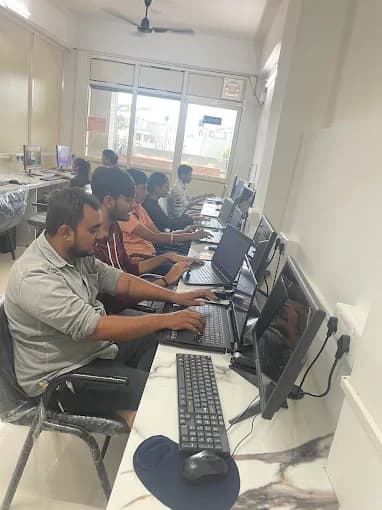
Mentors based at this centre. Deep learning sits inside our data and AI catalogue path — counseling introduces you to the right teaching team for your project.
Nishant Yadav
Hardware Networking · 3+ years
Cyber Security · Server Administration
Shivani Sharma
Software Faculty · 4+ years
CCC · Tally Prime · Prompt Engineering · Graphic Design
Full address and map: CEC Nikol location details. Wider AI map: artificial intelligence course in Ahmedabad.
Our three centres in Ahmedabad
For classroom admission we warmly welcome you and your parents to visit — Nikol is featured first below because this page is for learners choosing that centre. Please choose whichever centre is easier for you. Outside Ahmedabad? We offer online admission with a counseling call.
CEC NikolThis page
Near / opposite New DMart, Nikol (Satyam Plaza)
S -25/26, D-mart, Satyam Plaza, Raspan Cross Rd, opp. Suketu Residency, near Nikol, Ankur Chokadi, New India Colony, Nikol, Ahmedabad, Gujarat 382350+91 91049 37871CEC Maninagar
~2 minutes from Maninagar Railway Station
2nd floor, Gopal Tower, Computer Education And Cybernetics, near Maninagar Railway Station Road, Maninagar, Ahmedabad, Gujarat 380008+91 75740 10176CEC Vatva
Near Vatva Lake Garden; opposite Kashiben Hospital
1st Floor, Computer Education And Cybernetics, Opposite Kashiben Hospital Beside Khodiayar Vav, Near Vatva Lake Garden, Vinzol Crossing Rd, Deriya Para, Vatva, Ahmedabad, Gujarat 382440+91 91571 90839
Related guides
- Neural networks course in AhmedabadOne training step explained by hand
- Machine learning course in AhmedabadClassic models before deep stacks
- Artificial intelligence course in AhmedabadThe wider AI learning map
- Deep learning at our Maninagar centreSame subject, railway-side catchment
- How to start learning AIIf foundations are still new
- Book a counseling sessionPlan your order of skills
Questions about deep learning
What is deep learning in practice?
Training multi-layer neural networks on labelled data, tuning how learning happens (especially the learning rate), evaluating on held-out data and finishing a project log. It is more than running a notebook once until training accuracy looks high.
How do you choose a learning rate?
Try a small set of rates on the same network and data splits. Save checkpoints each epoch. Keep the rate and epoch with the best validation score, then score the test set once. In our sensor example, 0.01 beat both 0.1 and 0.001.
Why save checkpoints during training?
A later epoch can be worse than an earlier one. Checkpoints let you reload the best validation point instead of hoping the last epoch is best. Mentors ask which checkpoint you shipped and why.
How is this different from neural network basics?
Basics explain layers and one training step. Deep learning practice adds data folds, optimization experiments, evaluation and a project packet. Counseling decides whether you need basics first.
Do career changers need a degree in AI?
No. After 10th or 12th anyone can apply. Counseling checks your Python and whether machine learning should come before deep stacks. School learners of any grade start with counseling before a course.
Where is deep learning tooling heading?
AutoML and assistants often suggest rates and schedules, and checkpointing is routine in shared jobs. Verifying with validation curves and an honest test score stays the skill that does not go out of date.
How does CEC help you on this path?
We start with counseling to place you on the right rung, then lab practice on splits, learning-rate trials and checkpoints — about 80% practical — with mentors reviewing your project log. We stay with you until you get a job, based on your performance in training, projects and interviews.
Who joins deep learning practice here?
College students, career changers and working professionals. If optimization talk is still new, counseling may start you on machine learning or Python first.
How do I reach the Nikol lab?
CEC Nikol is Near / opposite New DMart, Nikol (Satyam Plaza). Easy from Naroda, Vastral, Nikol. Learners also come from Nikol, Naroda, Vastral. Call +91 91049 37871 before you visit.
Do I need to visit before classroom admission?
For classroom admission we warmly welcome you and your parents to visit — meet mentors and staff, see the lab and ask questions face to face. Call or WhatsApp +91 91049 37871 to book a time. Please choose whichever centre is easier for you if Maninagar or Vatva suits your commute better. Learning from outside Ahmedabad? We guide you on a counseling call and complete admission online.
Bring your background — we will map the next skill
In counseling at CEC Nikol we check your Python, sketch a finishable deep-learning project, and tell you honestly whether machine learning should come first.